














By Liz Simpson, Regional Sales Manager, Northeast U.S.
Key Takeaways
- Most organizations already have monitoring technologies capable of detecting threats, but detection alone does not stop incidents.
- The greatest vulnerability often exists between identifying an event and taking meaningful action.
- Integrating monitoring systems with an emergency alerting system can enable immediate communication, deterrence, and response coordination.
Detection Has Improved. Response Has Not Always Kept Up.
Organizations have never had more visibility into potential threats.
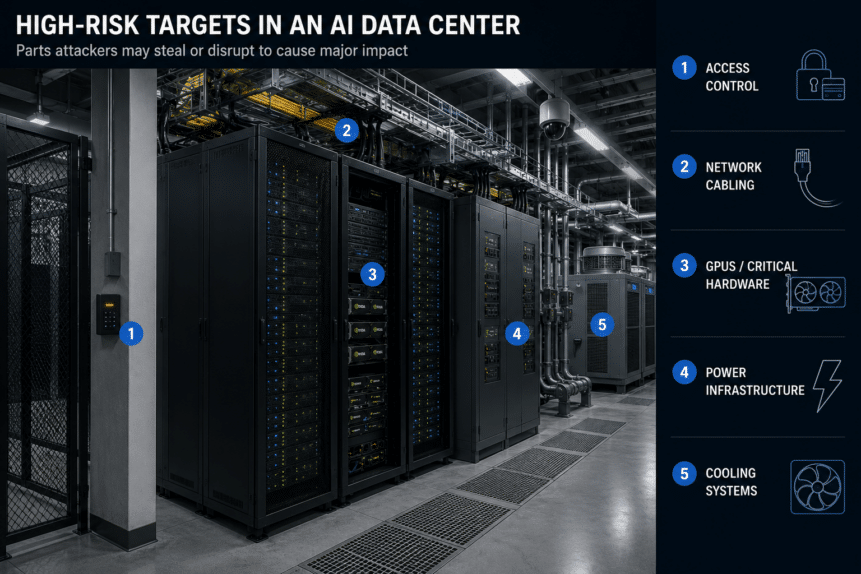
Security cameras, access control systems, motion sensors, environmental monitoring tools, perimeter detection technologies, and intelligent analytics can identify unusual activity within seconds. Whether protecting critical infrastructure, manufacturing facilities, transportation hubs, campuses, utilities, data centers, or public venues, many organizations have invested heavily in detection capabilities.
Yet a fundamental challenge remains. Detection does not equal response. An alert may appear instantly, but the process of assessing the situation, notifying stakeholders, dispatching personnel, and communicating with individuals on-site often takes valuable time. During that window, incidents can escalate, operations can be disrupted, and risks can increase.
The Response Gap Exists Across Every Industry
The response gap is not limited to a single sector. Many industries may need to secure against potential threats, including:
- A manufacturing facility may detect an unauthorized individual entering a restricted area.
- A transportation hub may identify suspicious activity within a secure zone.
- A campus may discover a safety threat requiring immediate instructions to occupants.
- A utility provider may detect a perimeter intrusion at a remote site.
- A stadium or public venue may need to communicate with large crowds during a developing incident.
In each case, monitoring technologies provide awareness. What often remains missing is the ability to immediately communicate and take action.
Organizations need more than alerts delivered to operators behind screens. They need systems capable of influencing events as they unfold.
This raises an important question for security leaders, emergency managers, and facility operators:
Can the gap between threat detection and alerting/response be reduced?
Increasingly, the answer is yes.
Why Does Automated Emergency Alerting Change the Equation?
The next evolution of an emergency alerting system connects detection directly to communication.
When monitoring technologies are integrated with automated alerting capabilities, organizations can initiate predefined actions the moment a triggering event occurs.
- Voice announcements can be broadcast automatically.
- Warning messages can be delivered instantly.
- Security teams can be notified simultaneously.
Response workflows can begin without waiting for multiple layers of manual intervention.
This approach transforms monitoring systems from passive observers into active participants in incident response.
Instead of simply recording an event, organizations can immediately engage in the situation.
From Awareness to Action
The most resilient organizations understand that visibility alone is not enough.
True preparedness requires the ability to move from awareness to action in seconds.
An effective emergency alerting system helps organizations:
- Reduce response delays
- Improve incident communications
- Deter unauthorized activity
- Enhance safety for employees and visitors
- Support business continuity
- Strengthen critical event management
- Improve coordination among response teams
Most importantly, it helps close the gap between detection and response.
How Can Genasys Help Turn Detection into Action?
Genasys helps organizations transform existing monitoring technologies into a comprehensive emergency alerting system.
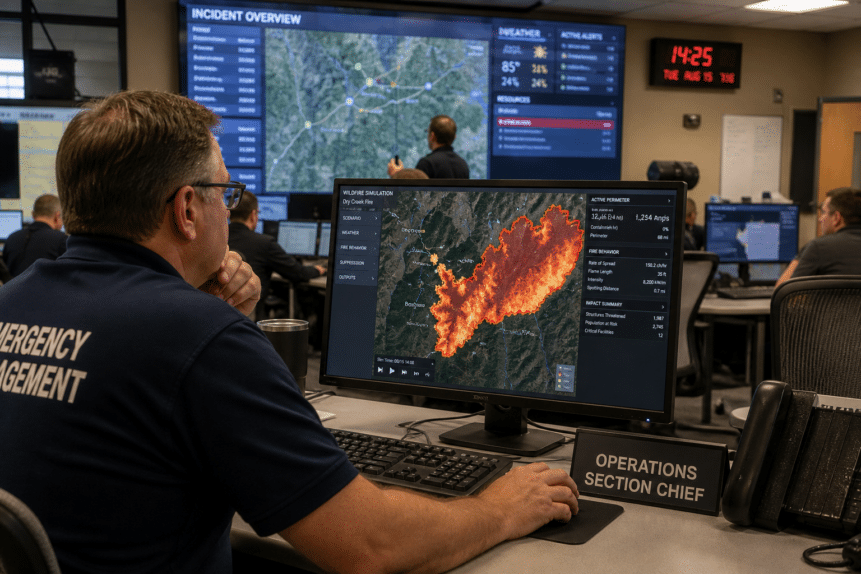
Through integrations with security, monitoring, and detection platforms, Genasys Protect can automate communications workflows and initiate alerts based on predefined triggers. Organizations can rapidly notify personnel, coordinate response efforts, and maintain situational awareness during evolving incidents.
For locations that require immediate on-site communication, Genasys LRAD systems provide highly intelligible voice messaging capabilities that can automatically broadcast warnings and instructions across large areas from a safe distance. This allows organizations to communicate directly with individuals at the point of an incident while response teams coordinate next steps.
Together, Genasys Protect and LRAD help organizations move beyond monitoring and toward proactive response.
Conclusion
Monitoring technologies have become remarkably effective at identifying threats and operational issues.
The next challenge is ensuring organizations can respond just as quickly.
As security, safety, and operational environments become more complex, the ability to transform monitoring systems into an emergency alerting system will become increasingly valuable.
The organizations best prepared for tomorrow’s challenges will be those that connect detection with immediate communication, coordinated response, and actionable intelligence.
Ready to Close the Response Gap?
Learn how Genasys Protect and LRAD can help transform your monitoring infrastructure into an integrated emergency alerting system.
Contact Genasys today to schedule a demo.
FAQs
What is an emergency alerting system?
An emergency alerting system is a technology platform that delivers notifications, warnings, and instructions to people during safety, security, operational, or emergency events.
Can monitoring systems trigger automated emergency alerts?
Yes. Many monitoring technologies can be integrated with emergency alerting platforms to automatically initiate communications and response workflows when predefined conditions occur.
Why is the gap between detection and response important?
The period between identifying a threat and acting is often when incidents escalate. Reducing this gap can improve safety, security, and operational outcomes.
What industries benefit from automated emergency alerting systems?
Critical infrastructure, manufacturing, utilities, transportation, higher education, healthcare, corporate campuses, public venues, and government organizations can all benefit from automated emergency alerting capabilities.