


By Liz Simpson, Regional Sales Manager, Northeast U.S.
Key Takeaways
- AI and simulation technologies support after action reporting but do not replace formal AAR processes
- Simulation tools help agencies explore "what if" scenarios to improve future planning and preparedness
- Different incidents require different simulation tools, making platform selection critical for meaningful analysis
After action reporting remains one of the most important disciplines in emergency management. Whether responding to wildfires, floods, hurricanes, hazardous material incidents, or large-scale evacuations, agencies rely on after action reports (AARs) to evaluate performance, document lessons learned, and improve future operations.
AI is now helping agencies expand the value of those reviews by providing simulation technologies that bring supportive modeling and simulation opportunities to supplement the overall after action report. These support tools help agencies analyze incidents faster, test assumptions, and explore alternative response strategies.
The combination of detailed AARs and advanced simulation capabilities creates a stronger foundation for preparedness. Together, they enable organizations to learn faster, improve planning, and make more informed operational decisions before the next emergency occurs.
After Action Reports Remain the Foundation of Improvement
An effective after action report captures operational realities that technology alone cannot fully understand. Leadership decisions, interagency coordination, public behavior, communications effectiveness, and field-level challenges all contribute to critical context.
AARs provide the baseline data that agencies use to:
- Identify strengths and operational gaps
- Document decision timelines
- Evaluate communication effectiveness
- Assess resource deployment and coordination
- Improve future planning and training
AI Expands the Value of After Action Reporting
Traditional after action analysis can take weeks or months to complete. Teams must gather reports, reconstruct timelines, review communications, and compare outcomes across multiple agencies.
AI can help accelerate this process by analyzing large datasets more efficiently and identifying patterns that may otherwise go unnoticed.
With AI-supported analysis, agencies can:
- Reconstruct incidents more quickly
- Analyze operational decision points
- Detect trends across multiple incidents
- Prioritize areas for improvement
- Reduce administrative workload
Most importantly, faster analysis allows emergency leaders to spend less time assembling reports and more time discussing how operations could improve in the future.
Using Simulation to Ask Better "What If" Questions
One of the most valuable applications of AI in emergency management is simulation-based analysis.
Simulating disasters like wildfires and floods alongside traffic can help agencies evaluate strategies and outcomes as well as test alternatives.
Emergency leaders can explore questions such as:
- What if evacuations had started earlier
- What if road closures had been implemented differently
- What if traffic had been routed along alternate corridors
- What if additional resources had been deployed sooner
These simulations do not rewrite history or invalidate operational decisions made under pressure. Instead, they provide agencies with a safe environment to evaluate possibilities and improve future planning.
This distinction is important. Simulations are excellent tools for learning and preparedness.
The Right Simulation Tool Matters
Not all simulation technologies are designed for the same purpose.
Different incidents require different modeling capabilities, data sources, and operational objectives. Agencies should ensure they are using the appropriate simulation tools to support planning and analysis.
For example:
- Traffic simulations can help evaluate evacuation routing, congestion management, and roadway utilization.
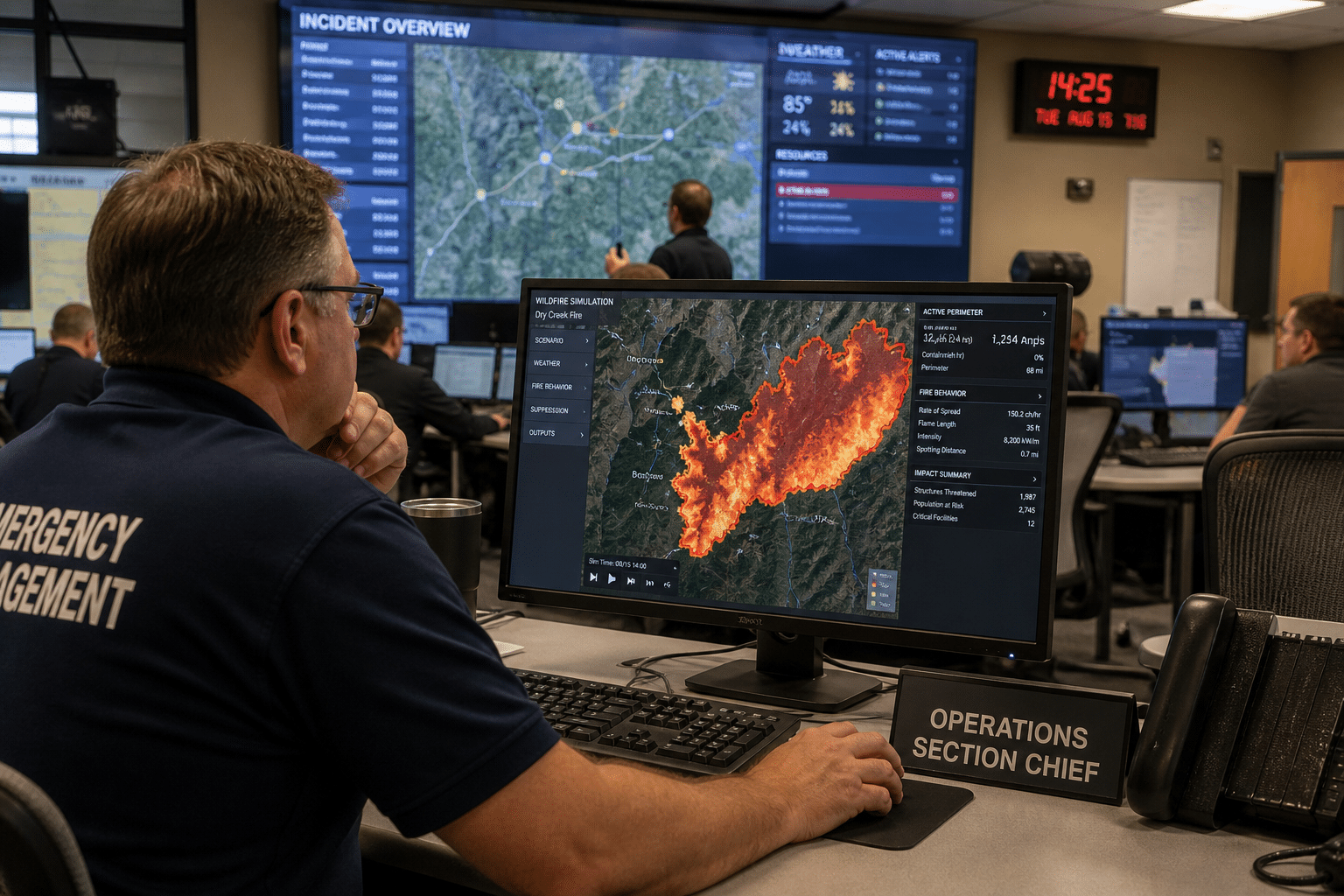
- Wildfire simulations can model fire spread and support evacuation planning decisions.
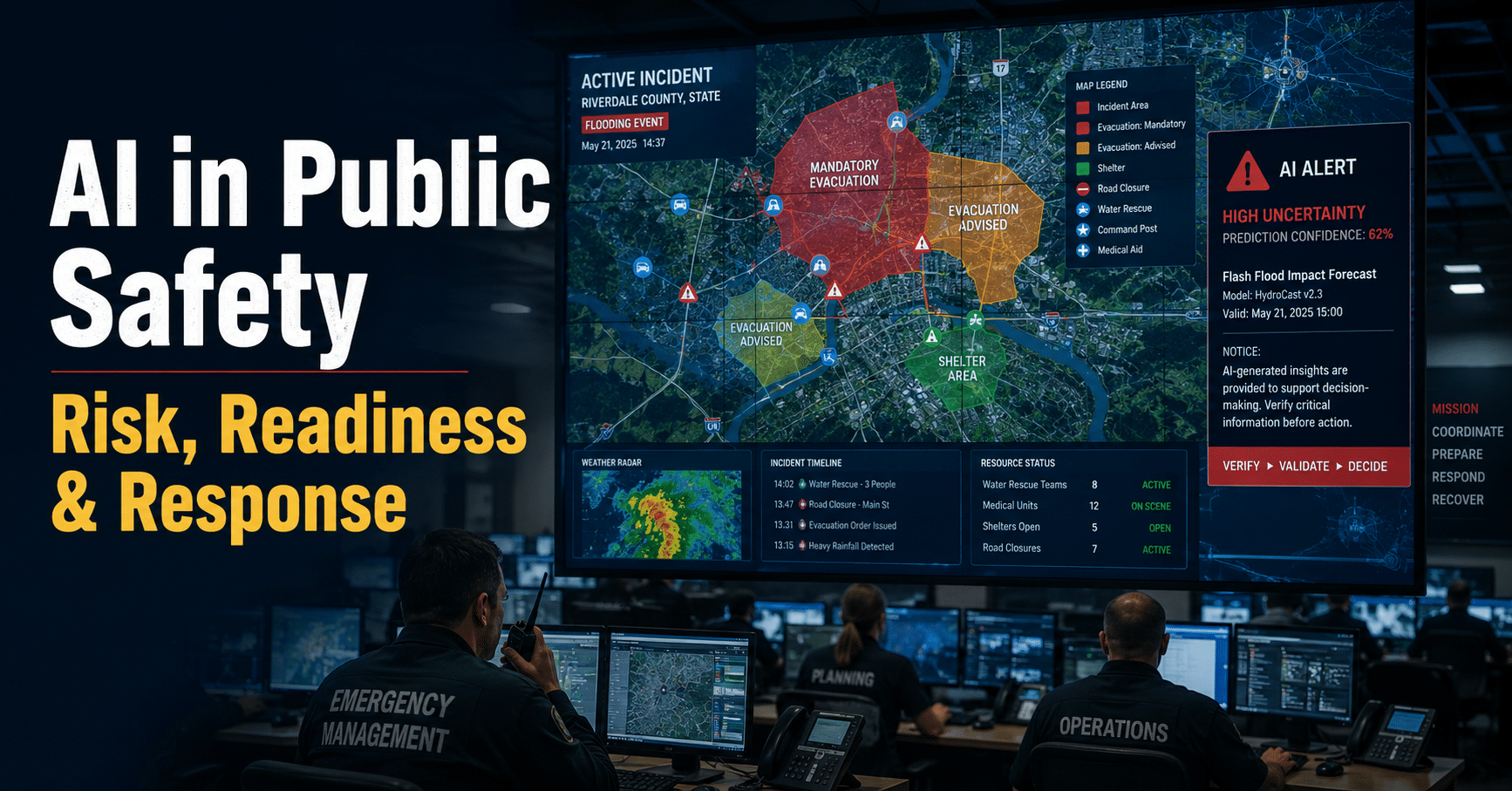
- Flood simulation platforms such as FloodMapp can provide flood forecasting and inundation modeling capabilities.
Genasys Protect supports this broader ecosystem by providing wildfire and traffic simulation capabilities while also enabling agencies to import external geospatial and hazard data to visualize impacted areas during incidents such as floods, dam inundations, and hazardous material releases.
This integrated approach helps agencies build a more complete operational picture while supporting both planning and real-time decision-making.
Turning Lessons Learned into Future Readiness
The true value of after action reporting comes from applying lessons learned to future operations.
When combined with AI-supported analysis and appropriate simulation tools, agencies can move beyond static documentation and build a continuous improvement cycle that strengthens preparedness over time.
Modern platforms such as Genasys Protect help agencies connect operational insights with tools for:
- Wildfire simulation
- Traffic and evacuation modeling
- Zone-based planning
- Real-time situational awareness
- Coordinated public communications
By integrating simulations, operational workflows, and communications into a unified environment, agencies can better understand risk, improve planning assumptions, and strengthen future response strategies.
Final Thoughts
After action reporting remains essential to emergency management because it captures the operational realities and human decisions behind every incident.
AI and simulation technologies strengthen that process by helping agencies analyze information faster, test alternative strategies, and improve future preparedness. Together, they create a more informed and proactive approach to emergency planning.
The key is understanding that these technologies are complementary. Effective after action reporting provides the foundation. AI and simulation tools help agencies expand the value of what they learn.
Contact Genasys to learn how wildfire simulations, traffic modeling, and integrated situational awareness tools can support your agency's planning, preparedness, and operational decision-making.
FAQs
What is the purpose of an after action report?
An after action report documents what occurred during an incident, evaluates operational effectiveness, identifies lessons learned, and supports future planning improvements.
Does AI replace after action reporting?
No. AI supports after action reporting by accelerating analysis and helping agencies evaluate data, but human-led AARs remain essential for capturing operational context and decision-making.
How do simulation tools support emergency management?
Simulation tools help agencies test potential scenarios, evaluate operational strategies, and improve preparedness by exploring alternative outcomes in a controlled environment.
Why is choosing the right simulation tool important?
Different emergencies require different modeling capabilities. Wildfire, traffic, flood, and hazardous material incidents each rely on specialized simulation technologies designed for those specific operational challenges.