










By Robert Putnam, Senior Marketing Manager, Genasys Inc.
Key Takeaways:
- Public safety, security, and emergency response teams often need to communicate in dangerous, unstable, or hard-to-reach areas.
- Remotely operated acoustic systems allow agencies to issue clear voice instructions across perimeters, facilities, and incident areas without sending additional personnel into unnecessary risk.
- LRAD and Genasys Acoustics systems help organizations extend communication reach, support faster response, and maintain command presence from safer positions.
Every critical incident presents a difficult balancing act.
Public safety leaders, security professionals, and emergency managers must maintain situational awareness, communicate with affected individuals, and coordinate response efforts. At the same time, they are responsible for protecting personnel from unnecessary risk.
In many incidents, communication itself can create exposure. Responders may need to move closer to a hazardous area to warn people, issue instructions, support evacuations, establish intent, or maintain control across a perimeter.
Whether managing an active threat, hazardous materials release, civil disturbance, wildfire evacuation, critical infrastructure intrusion, or search-and-rescue operation, the question remains the same:
How do you communicate clearly and maintain control without sending additional personnel into danger?
The Traditional Command Model Was Built Around Physical Presence
Historically, incident commanders often relied on personnel to physically move closer to an event to gather information, relay instructions, or establish communication with affected individuals.
This approach has limitations.
Every additional officer, firefighter, security professional, or responder positioned near a hazardous area introduces additional risk. Expanding a perimeter often requires additional staffing. Establishing communication may require personnel to move into uncertain environments.
As incidents become larger and more complex, maintaining operational effectiveness frequently comes at the expense of increased exposure.
Why Does Expanding the Perimeter Often Expand the Risk?
Modern incidents rarely stay confined to a single location.
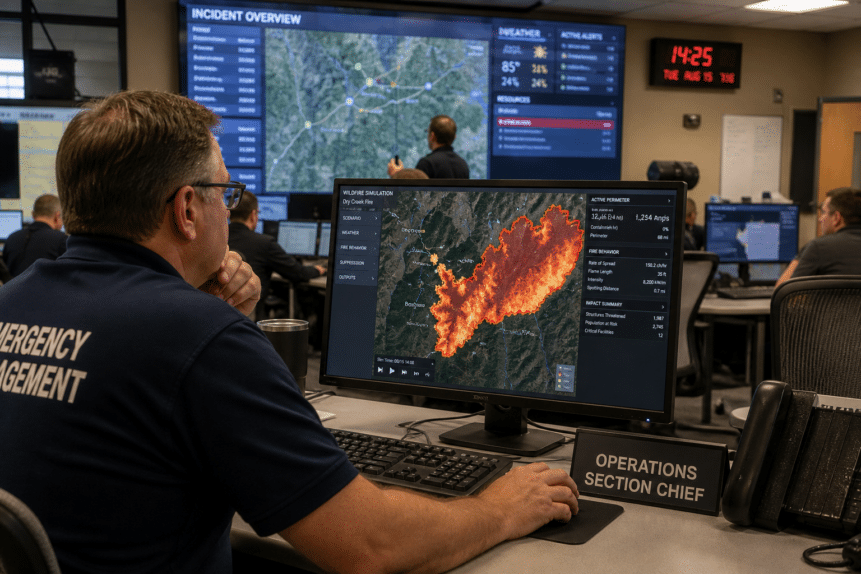
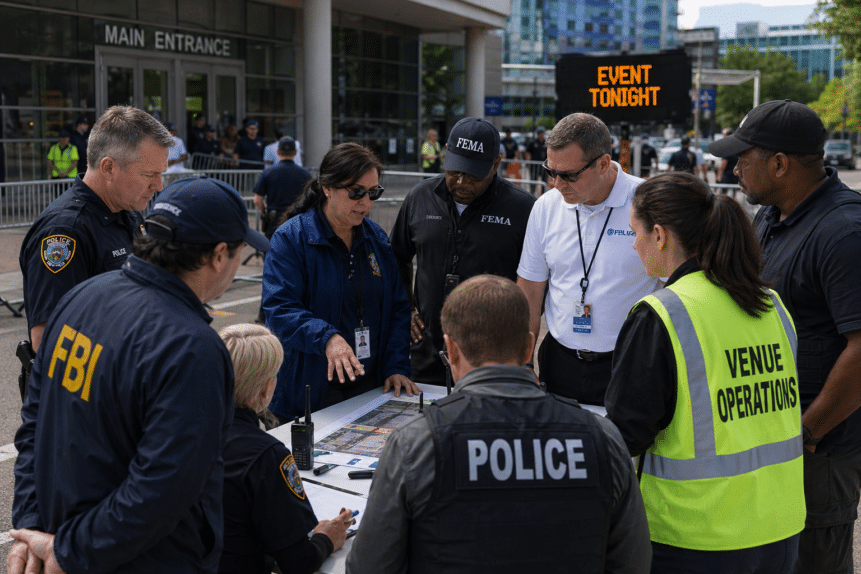
Wildfires spread rapidly. Large public gatherings cover multiple city blocks. Critical infrastructure facilities span vast geographic areas. Security incidents can unfold across multiple access points simultaneously.
In these environments, commanders must be able to:
- Deliver instructions across large areas
- Communicate with individuals beyond traditional perimeter boundaries
- Support evacuations and shelter-in-place operations
- Deter unauthorized activity
- Maintain control without deploying additional personnel
The challenge is that traditional communication methods often require responders to physically bridge these gaps.
This is where personnel exposure increases: when communication gaps force responders to move closer to the hazard.
How Remote Communication Extends Command Presence and Reduces Risk
Technology is changing how agencies think about command and control.
Rather than placing personnel closer to danger, many organizations are adopting technologies that extend communication capabilities into the incident area itself.
Remotely operated acoustic systems allow personnel to communicate from protected locations while maintaining a clear operational presence in the field.
This shift creates what can be described as remote presence.
Instead of sending personnel forward to deliver instructions, agencies can project intelligible voice messages into affected areas from a safe distance. Instead of deploying additional responders to maintain communications, incident commanders can remotely initiate messaging, warnings, and instructions while enhancing situational awareness.
The result is a safer and more scalable response model.
Remote Acoustic Systems Create New Operational Possibilities
The benefits extend beyond responder safety.
Remotely operated communication capabilities help organizations:
- Expand operational coverage without increasing staffing requirements
- Improve communications during dynamic incidents
- Support coordinated evacuations
- Enhance critical infrastructure protection
- Improve event management and crowd security
- Reduce response times for urgent communications
- Boost command authority across larger geographic areas
Most importantly, they allow agencies to amplify influence over an incident while minimizing unnecessary exposure to personnel.
In an era where staffing shortages, increasing operational complexity, and evolving threats challenge public safety organizations, this capability becomes increasingly valuable.
How Genasys Helps Agencies Communicate From Safer Positions
Genasys helps public safety agencies, critical infrastructure operators, and security organizations extend voice communications into areas where it may be unsafe, impractical, or inefficient to send additional personnel.
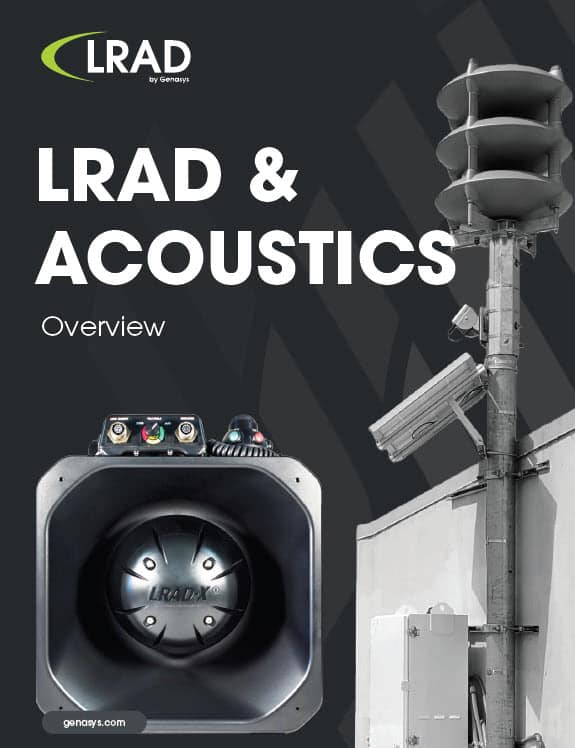
LRAD systems provide focused, long-range voice communication for targeted instructions across perimeters, access points, vessels, crowds, or incident areas. Genasys Acoustics systems provide wide-area voice coverage for facilities, campuses, communities, and outdoor environments where people need clear instructions, not just tones or sirens.
These systems can be operated remotely, allowing authorized users to activate broadcasts, issue live or prerecorded messages, and coordinate communications from protected locations.
When integrated with Genasys Protect, agencies can coordinate voice broadcasts with broader protective communications across multiple channels. Together, LRAD, Genasys Acoustics, and Genasys Protect help organizations expand response capabilities, strengthen perimeter communications, and reduce unnecessary personnel exposure during critical events.
Conclusion
The need to communicate from dangerous or hard-to-reach areas is unlikely to disappear.
As incidents become more complex and agencies face increasing pressure to do more with fewer resources, leaders must find new ways to elevate operational effectiveness while protecting personnel.
The future of incident response is about extending communication, influence, and command presence through technology.
Remotely operated acoustic systems offer a practical path forward, helping organizations communicate effectively, maintain control, and keep responders safe during critical events.
Ready to Communicate From Safer Positions?
Discover how LRAD and Genasys Protect can help your organization expand communications capabilities while minimizing operational risk.
Contact Genasys today to schedule a demo.
FAQs
How can public safety agencies reduce risk to personnel during critical incidents?
Agencies can reduce unnecessary personnel exposure by using remotely operated technologies that allow teams to communicate, coordinate, and issue instructions from safer locations during dangerous or rapidly changing incidents.
What are remotely operated acoustic systems?
Remotely operated acoustic systems project highly intelligible voice messages over long distances and can be controlled from a protected location during an incident. They help agencies deliver instructions, warnings, and life-safety information without sending additional personnel into high-risk areas.
How do LRAD systems help agencies communicate from safer positions?
LRAD systems enable agencies to deliver focused, long-range voice messages across perimeters, crowds, vessels, access points, or incident areas. This allows teams to communicate with individuals or groups without always needing to move personnel closer to potential hazards.
How can remote voice communication support incident response?
Remote voice communication can support evacuations, shelter-in-place instructions, perimeter control, crowd management, access control, hazardous area communications, and search-and-rescue operations by helping agencies reach people with clear instructions from safer positions.