
















By Jeff Halstead, Ret. Chief of Police, Fort Worth, TX
Key Takeaways:
- When used responsibly with high levels of transparency and accountability, AI can accelerate investigations, improve situational awareness, and reduce administrative burdens.
- AI helps law enforcement consolidate information from multiple systems and data sources into a single operational picture.
- Agencies must balance AI benefits with human oversight to avoid errors, misinformation, and overreliance on automated recommendations.
Artificial intelligence is rapidly becoming part of everyday policing. While headlines often focus on futuristic concepts, the reality is much more practical. Today, law enforcement agencies use AI to help manage growing volumes of information, identify patterns, accelerate investigations, and improve operational efficiency.
As agencies face staffing shortages, increasing call volumes, and expanding data sources, AI is emerging as a tool that can help officers and investigators make better use of the information they already have.
The question is no longer whether law enforcement will use AI. The question is how agencies can use AI responsibly while maintaining trust, accuracy, and accountability.
What is the Information Challenge Facing Modern Law Enforcement?
Every day, law enforcement personnel generate and consume enormous amounts of information. Incident reports, CAD data, records management systems, emails, text messages, surveillance footage, officer notes, and intelligence reports often exist in separate systems that do not communicate effectively with one another.
Finding critical information can be time-consuming, especially when investigators must search multiple databases or review years of historical records.
The challenge extends beyond data volume and into fragmented information. When information is scattered across disconnected systems, valuable insights can remain hidden. Investigators may spend hours searching for connections that could otherwise be identified in minutes.
AI’s Most Valuable Role: Connecting the Dots
One of the most promising uses of AI in law enforcement is bringing information together from multiple sources and making it easier to access.
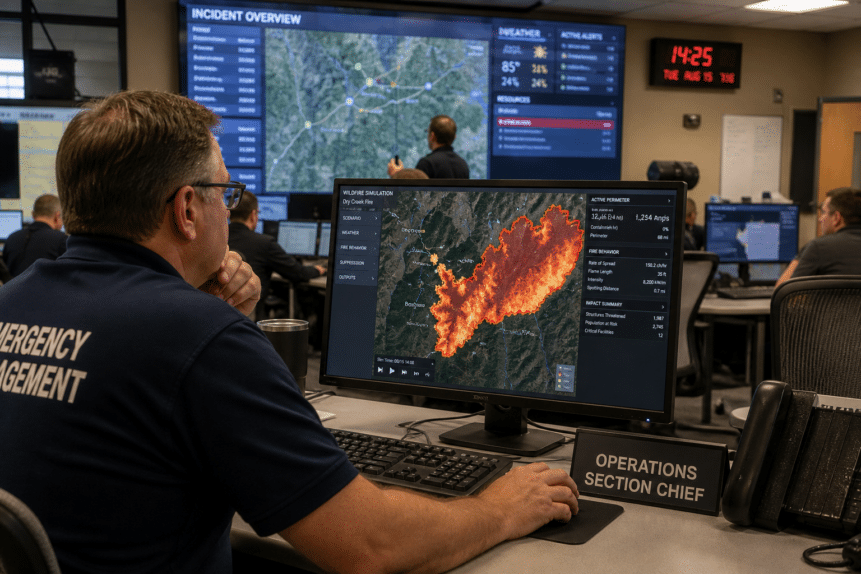
Platforms are available that use AI to aggregate data from numerous systems and provide investigators with a unified view of people, locations, incidents, vehicles, and related activities.
Rather than replacing investigative work, AI helps officers identify relationships, patterns, and leads that might otherwise be overlooked.
With this tech-forward support, law enforcement agencies are able to:
- Search information across multiple systems simultaneously
- Identify connections between cases
- Surface relevant intelligence more quickly
- Reduce time spent on manual research
- Improve situational awareness during active investigations
The result is better access to existing information.
What are Some Faster Decisions That Can Lead to Better Outcomes?
When officers and investigators can access information quickly, operational efficiency improves.
AI-powered tools can help summarize reports, identify trends, organize case information, and prioritize relevant data points. Tasks that previously required hours of manual review can often be completed much faster.
This can lead to:
- Faster case development
- More efficient investigations
- Reduced administrative workload
- Better allocation of personnel resources
- Reduced overtime costs
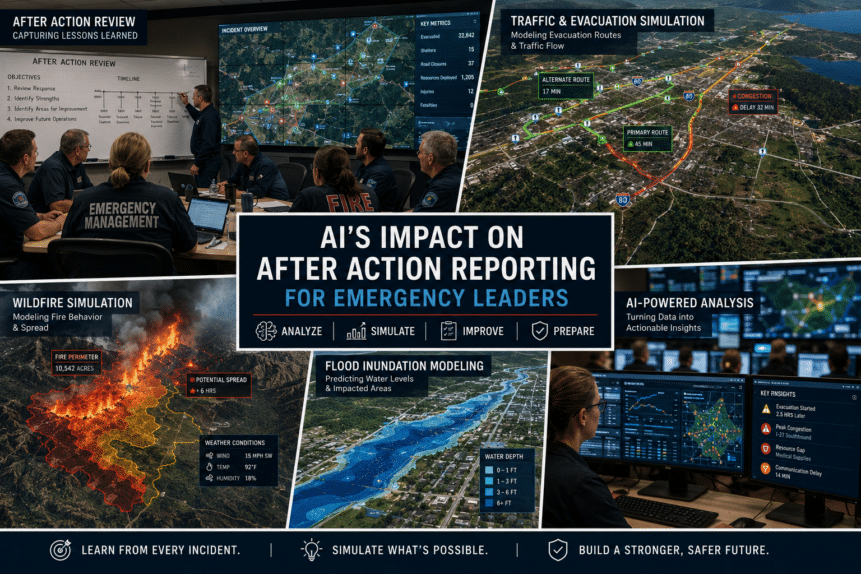
- More meaningful after action reporting during major events
For agencies facing staffing constraints, these efficiencies can have a significant impact on overall operations. In many cases, the greatest benefit of AI is allowing personnel to focus on higher-value work that requires professional judgment and experience.
What Risks of AI in Law Enforcement Cannot Be Ignored?
While AI offers significant benefits, it is not infallible.
AI systems can produce inaccurate conclusions when data is incomplete, outdated, biased, or improperly interpreted. Generative AI tools have also demonstrated a tendency to create false information, commonly referred to as hallucinations.
For law enforcement agencies, the consequences of acting on incorrect information can be serious.
Key concerns include:
- Inaccurate or incomplete recommendations
- Data quality issues
- Potential bias in source data
- Lack of transparency in AI-generated conclusions
- Overreliance on automated outputs
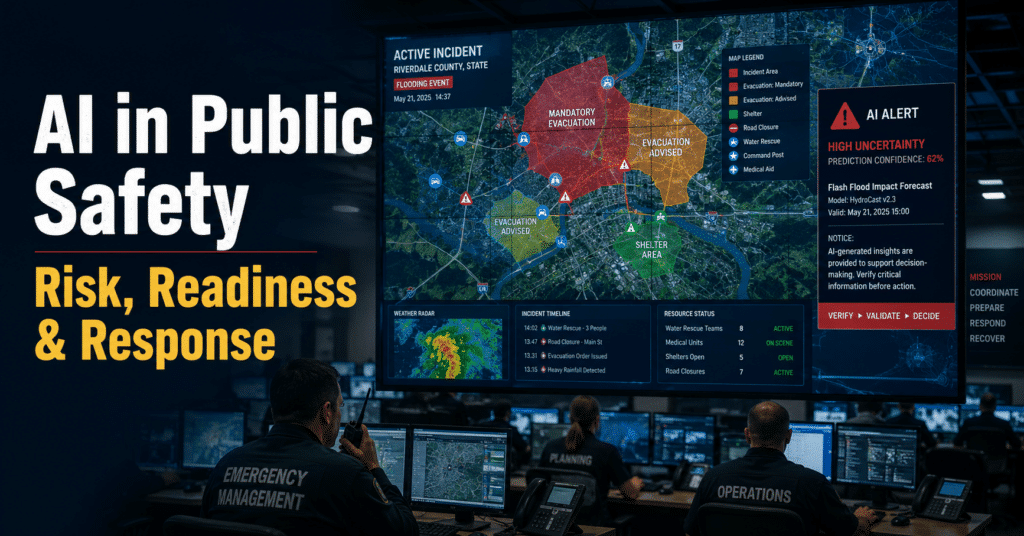
AI should support decision-making, not replace it. Human oversight remains essential. Investigators, analysts, supervisors, and command staff must continue validating information and exercising professional judgment before taking action. The most successful agencies view AI as an assistant rather than an authority.
The Future of AI in Public Safety Is Human-Centered
As AI capabilities continue to evolve, agencies that adopt thoughtful governance policies will likely see the greatest benefits.
Successful implementation requires:
- Clear oversight procedures
- Data quality standards
- Transparency and accountability
- Ongoing training
- Defined limits on AI use
The goal should be to help law enforcement professionals access information faster, make more informed decisions, and serve their communities more effectively.
How Genasys and Peregrine Help Modern Law Enforcement
Genasys continues to help law enforcement agencies improve operational communications, collaboration, and situational awareness through its secure communications solutions.
Through its partnership with Peregrine, agencies can combine AI-powered investigative and intelligence capabilities with secure operational communications through Evertel.
Together, these technologies help agencies:
- Break down information silos
- Improve investigative workflows
- Enhance interagency collaboration
- Accelerate information sharing
- Support faster operational decision-making
By combining AI-driven intelligence with secure communications, law enforcement agencies can create a more connected and efficient operational environment while maintaining the human oversight necessary for responsible policing.
Conclusion
AI is already transforming how law enforcement agencies manage information and conduct investigations. The technology’s greatest strength is its ability to organize, analyze, and surface critical information faster than traditional manual processes.
However, AI is not a substitute for professional judgment. Agencies that combine AI-powered insights with strong governance, human oversight, and secure communications will be best positioned to improve efficiency while maintaining trust and accountability.
Learn how Genasys, Evertel, and our partnership with Peregrine can help your agency improve information sharing, operational communications, and situational awareness.
Contact Genasys today to schedule a demonstration.