












Outdoor Warning Systems and Acoustic Hailing Device Technology Explained
Key Takeaways:
- Outdoor Warning Systems & Acoustic Hailing Device Technology remain essential for resilient emergency communications.
- Voice-capable and mobile systems enhance situational awareness and response effectiveness for law enforcement, crowd safety and control, and the military.
- Integrated, layered alerting strategies improve public trust and community resilience even when the power goes down.
Outdoor Warning Systems and Acoustic Hailing Devices play a critical role in modern public safety communications. When emergencies unfold rapidly and conditions are chaotic, audible alerts and voice commands remain one of the fastest and most reliable ways to reach people in outdoor and high-noise environments.
While mobile alerts and digital notifications have expanded emergency communications, they are not fail-safe. Network congestion, power outages, device limitations, and message fatigue can delay or prevent critical information from reaching the public. Outdoor warning systems and acoustic hailing devices provide a complementary and often decisive communication layer that does not depend on personal technology.
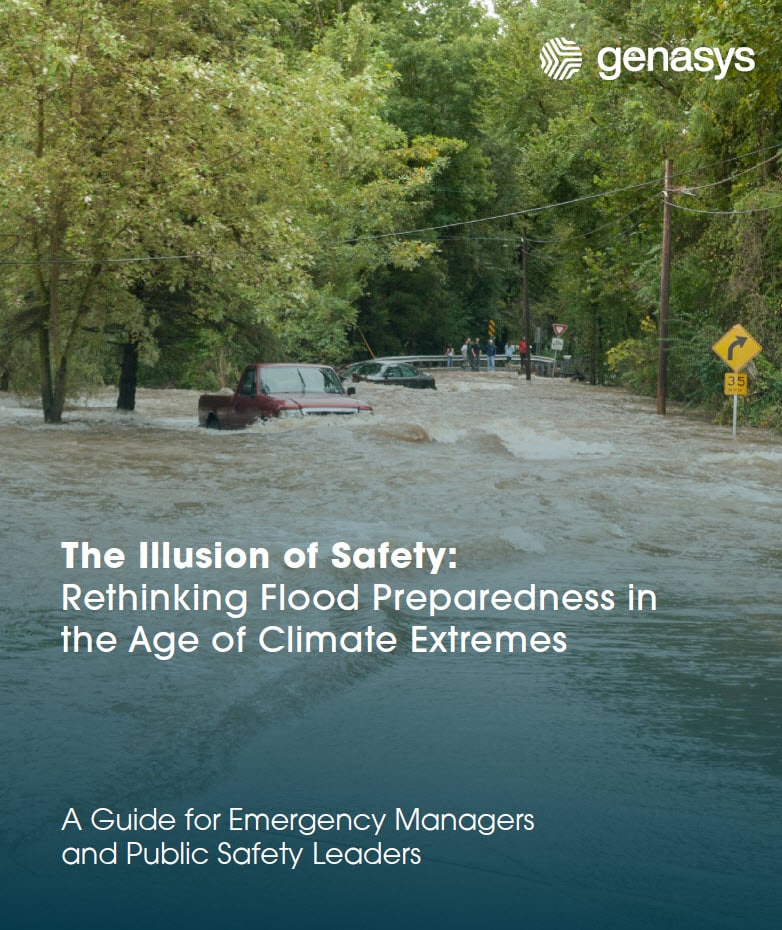
From tornado and flooding warnings and wildfire evacuations to law enforcement crowd control and critical infrastructure protection, these systems support emergency preparedness, incident management, and disaster recovery across all-hazards scenarios.
This page explains how outdoor warning systems and acoustic hailing device technology work, where they are most effective, and why they remain essential tools for public safety agencies responsible for protecting people and property.
Outdoor Warning System Fundamentals
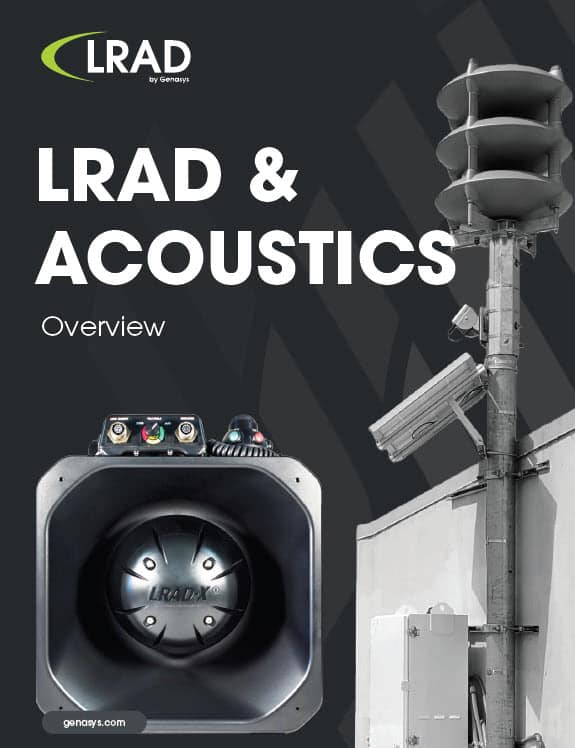
An outdoor warning system is a network of fixed or mobile acoustic devices designed to broadcast alert tones and voice messages across large geographic areas. These systems are typically used by municipalities, emergency management agencies, fire departments, and law enforcement to warn people who are outdoors or otherwise unreachable through indoor or personal notification channels.
Outdoor warning systems are engineered to overcome distance, weather, ambient noise, and terrain challenges to deliver clear and intelligible alerts during emergencies.
Core Components of Outdoor Warning Systems
Most outdoor warning systems include:
- High-powered speakers or sirens
- Centralized or distributed control software
- Redundant power sources such as battery or solar backup
- Secure activation and authorization controls
- Connectivity via radio, cellular, satellite, or IP networks
Together, these components enable public safety agencies to activate alerts quickly, deliver messages to specific geographic areas, and maintain reliable communication even under extreme conditions.
Centralized control and secure authorization allow trained personnel to issue warnings without delay, while distributed connectivity options help ensure messages can be sent even if one network path is unavailable. Redundant power sources support continued operation during outages, and message targeting reduces unnecessary alerts outside the affected area.
This combination of speed, precision, and resilience is essential during high-stress incidents when conditions change rapidly, and timely communication can directly influence safety outcomes.
Sirens vs. Voice-Enabled Warning Systems
Traditional sirens rely on tones to indicate danger. While effective for grabbing attention, tones alone require prior public education and do not provide instructions.
Voice-enabled outdoor warning systems address this limitation by delivering spoken messages that explain:
- The nature of the threat
- Who is affected
- What actions to take
- When to act
- What to do once the crisis has been resolved
Voice messaging improves situational awareness by providing clear, specific information about what is happening, who is affected, and what actions should be taken. Unlike warning tones, which require prior education and interpretation, spoken messages reduce ambiguity during high-stress situations when people may be confused or distracted.
By delivering concise instructions such as evacuation routes, shelter locations, or perimeter boundaries, voice messaging helps the public make informed decisions quickly. This clarity will help reduce hesitation and limit the spread of misinformation while supporting faster, safer responses by guiding individuals toward appropriate protective actions in real time.
Why Outdoor Warning Systems Still Matter
Public safety best practices increasingly emphasize layered emergency communications systems where outdoor warning systems serve as a foundational component to be subsidized with high tech software alerting systems. In the event that power or cell service is down, an outdoor warning system with battery backup is still available to guide community members to safety.
Outdoor warning systems remain essential because they:
- Do not rely on smartphones or internet access
- Reach visitors, commuters, and transient populations
- Function during network outages or congestion
- Provide immediate, audible alerts in outdoor and high-noise environments
Use Within Critical Infrastructure and Perimeter Alerting
Critical infrastructure and high-risk facilities present unique safety and security challenges that require immediate, reliable communication when incidents occur. Dams, power plants, industrial and hazardous materials sites, school campuses, transportation hubs, and ports operate in complex environments where failures, accidents, or security threats can have widespread consequences.
Outdoor warning systems and perimeter alerting capabilities play a vital role in protecting workers, first responders, and surrounding communities by delivering clear, audible instructions during time-sensitive situations. Whether warning of a potential dam release, a hazardous material exposure, or a security incident at a port, train, or transit facility, these systems support rapid decision-making, coordinated response, and effective risk mitigation in environments where delays or confusion can significantly increase harm.
Warning and Alerting Around High-Risk Facilities
Critical infrastructure sites such as dams, power plants, water treatment facilities, and chemical storage areas require specialized alerting capabilities. Outdoor warning systems provide immediate alerts to workers, nearby communities, and first responders when incidents occur.
In dam safety scenarios, for example, outdoor sirens and voice alerts can warn downstream populations of emergency releases or structural failures, buying critical time for evacuation and response.
Industrial and Hazardous Materials Safety
Outdoor warning systems help industrial and hazardous materials facilities meet safety and emergency response requirements by delivering immediate, audible alerts to everyone in the affected area, including workers and nearby communities, without relying on personal devices.
Facilities handling hazardous materials use outdoor warning systems to:
- Alert personnel to accidental releases
- Issue shelter-in-place or evacuation instructions
- Coordinate with local emergency management agencies
Because these systems operate independently of personal devices, they help ensure warnings reach everyone in the affected area regardless of access to smartphones, mobile service, or digital alert subscriptions. In industrial and hazardous materials incidents, conditions can escalate rapidly, leaving little time for layered or sequential notifications.
Outdoor warning systems support regulatory safety objectives established by organizations such as OSHA and the EPA by providing immediate, audible communication to workers, contractors, and nearby communities.
These systems are particularly valuable in environments with rotating shifts, contractor activity, high ambient noise, and multilingual populations. By delivering clear instructions such as evacuation, shelter in place, or restricted-area notifications, outdoor warning systems reinforce emergency action plans, improve compliance during incidents, and help reduce exposure, confusion, and secondary harm during high-consequence industrial events.
Transportation Hubs and Port Security
Ports, rail yards, and transportation corridors often involve large outdoor spaces and mobile populations that can include workers, as well as visitors, vendors, and other ancillary personnel. Outdoor warning systems support perimeter alerting, evacuation guidance, and incident coordination during security events or hazardous material incidents.
Acoustic Hailing Device Technology
Acoustic Hailing Devices are directional, long-range acoustic devices (LRADs) designed to project clear voice commands over significant distances up to 3 kilometers (nearly two miles). These devices are commonly used by law enforcement, maritime authorities, border security, the military, and public safety agencies for tactical communication.
Unlike traditional sirens, acoustic hailing devices are designed for targeted, intelligible speech rather than broad area alerting.
Law Enforcement and Crowd Management Applications
Long Range Acoustic Devices, commonly referred to as LRADs, have become an important communication tool for law enforcement agencies tasked with managing large crowds, dynamic public events, and high-risk situations. Unlike traditional loudspeakers, LRAD technology is designed to project clear, intelligible voice commands over long distances and through high ambient noise, allowing officers to communicate effectively without escalating force.
In crowd management and civil disturbance scenarios, the ability to deliver precise instructions such as dispersal orders, safety directions, or boundary notifications supports de-escalation, improves compliance, and enhances officer and public safety. When used appropriately within established policies and training frameworks, LRADs serve as a communication-first capability that helps law enforcement maintain order while prioritizing clarity, accountability, and situational awareness.
Law enforcement agencies use acoustic hailing devices or LRADs to communicate with crowds or individuals during:
- Large events, like sports events, concerts, festivals
- Large-scale weather events, like wildfires, floods, and hurricanes
- Civil unrest
Clear communication at distance helps reduce misunderstandings, supports de-escalation, and improves officer safety.
Mobile and Tactical Deployment
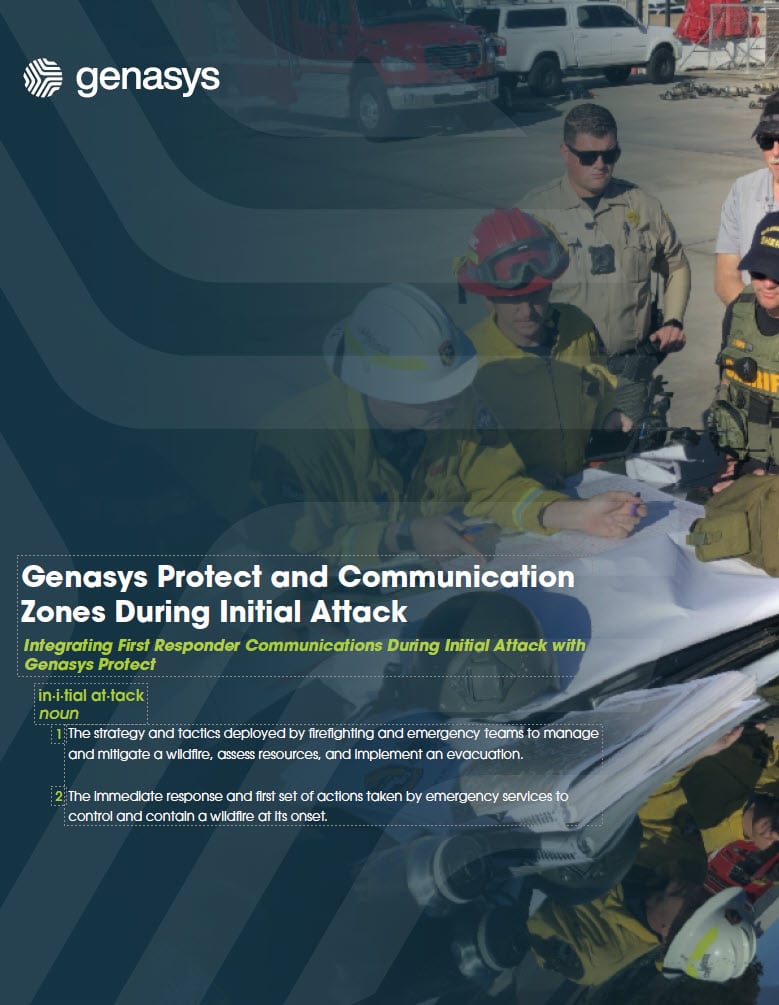
Acoustic hailing devices can be vehicle-mounted or portable, allowing rapid deployment during dynamic incidents such as wildfires, flooding, or search and rescue operations. Their mobility makes them valuable tools for incident commanders who need flexible communication options in evolving environments.
Integration With Emergency Communications Systems
Outdoor warning systems and acoustic hailing devices are most effective when integrated into a broader emergency communications strategy that coordinates people, processes, and technology.
When audible alerts are aligned with mobile notifications, public address systems, emergency operations centers, and incident command workflows, agencies can deliver consistent and timely messages across multiple channels.
This integrated approach reduces conflicting information, improves situational awareness for both responders and the public, and allows messages to be adjusted as conditions evolve. By treating outdoor warning and acoustic hailing as part of a unified communications framework rather than standalone tools, public safety agencies strengthen preparedness, support coordinated response, and improve overall risk management during complex, fast-moving incidents.
Layered Alerting and Message Consistency
Modern public safety agencies increasingly coordinate outdoor warning alerts with mobile notifications, public address systems, and emergency operations centers to ensure consistent, timely messaging across all available channels. This coordination allows incident commanders and emergency managers to deliver the same core instructions simultaneously to people outdoors, individuals on personal devices, facilities with internal PA systems, and partner agencies monitoring response activity.
When messages are synchronized across channels, agencies reduce the risk of conflicting information and improve public understanding while reinforcing situational awareness as incidents evolve. Centralized coordination through emergency operations centers also enables message updates, geographic targeting, and approval workflows that support rapid decision-making during high-stress events.
Many agencies align outdoor warning activations with national alerting frameworks such as IPAWS to support interoperability, governance, and compliance. Alignment with national frameworks helps standardize alerting protocols, define authorization roles, and ensure compatibility with regional, state, and federal partners.
This structure is particularly important during large-scale or multi-jurisdictional incidents where consistent messaging and shared situational awareness are essential. By integrating outdoor warning systems into established alerting frameworks, public safety agencies strengthen coordination, improve accountability, and enhance the overall reliability of emergency communications systems before, during, and after critical events.
Building Public Trust Through Audible Communication
Clear, timely communication builds public confidence during emergencies. Outdoor warning systems and acoustic hailing devices deliver messages that are difficult to ignore and easy to understand, even in stressful conditions.
Communities that invest in reliable audible warning capabilities demonstrate a commitment to transparency, equity, and public safety readiness.
A Core Capability for Modern Emergency Communications Systems
Long Range Acoustic Devices, commonly known as LRADs, have evolved from specialized tools into a core component of modern emergency communications systems.
Designed to deliver highly intelligible voice messages over long distances and through high ambient noise, LRAD technology addresses one of the most persistent challenges in public safety communications: reaching people quickly and clearly when conditions are chaotic and time is limited. Whether used for wide-area warning, targeted instructions, or tactical communication, LRADs provide a reliable audible layer that complements digital alerting and fills critical gaps when other channels are constrained or unavailable.
LRADs are uniquely positioned within emergency communications strategies because they support both broad public warning and precise, directional messaging. This dual capability allows agencies to use the same acoustic infrastructure for community alerts, evacuation instructions, perimeter control, crowd management, and responder coordination.
In high-noise or high-stress environments such as public demonstrations, wildfire evacuation zones, industrial sites, or waterfront operations, LRADs enable authorities to communicate intent, boundaries, and protective actions without relying on proximity or personal devices. This clarity supports de-escalation, improves compliance, and enhances both public and responder safety.
Within this landscape, Genasys ACOUSTICS is an integrated approach to acoustic communications. Rather than functioning as standalone devices, Genasys ACOUSTICS solutions are designed to operate as part of a unified emergency communications ecosystem. When integrated with outdoor warning systems, alert management platforms, and emergency operations workflows, acoustic technology becomes a foundational layer for situational awareness, incident management, and coordinated response.
By treating acoustic communications as essential infrastructure rather than supplemental equipment, public safety agencies strengthen their ability to communicate under all conditions. LRADs and acoustic hailing systems ensure that warnings and instructions are not only issued, but heard, understood, and acted upon.
As emergency communications strategies continue to evolve, long-range acoustic technology remains a critical anchor, providing resilient, audible communication that supports preparedness, response, and recovery across all-hazards scenarios.
Frequently Asked Questions
1. What are outdoor warning systems used for?
Outdoor warning systems are used to alert people outdoors to immediate threats such as severe weather, flooding, wildfires, hazardous material incidents, and evacuation orders using sirens or voice messages.
2. What is an acoustic hailing device and how is it different?
An acoustic hailing device is a directional system designed to project clear voice commands over long distances. Unlike outdoor warning sirens, it is used for targeted communication, often by law enforcement or maritime authorities.
3. Why are outdoor warning systems still important today?
Outdoor warning systems remain important because they do not rely on smartphones, apps, or internet access and can reach everyone within range during emergencies, including visitors and vulnerable populations.
4. When do public safety agencies use acoustic hailing devices?
Acoustic hailing devices are used during crowd management, public events, civil unrest, maritime operations, and tactical incidents where clear communication at distance is required.
5. How do outdoor warning systems support emergency preparedness?
They support preparedness through routine testing, public education, and clear alert protocols, helping communities respond faster and more safely during emergencies.
6. Can outdoor warning systems integrate with other alerting platforms?
Yes. Many outdoor warning systems integrate with broader emergency alert platforms and national frameworks such as IPAWS to ensure coordinated, multi-channel communication.