











By Pedro Candela Terry, Content Marketing Manager, Genasys Inc.
Key Takeaways:
- Large events amplify existing staff shortages and create hidden operational risk
- Fatigue degrades judgment, communication clarity, and response effectiveness
- Proactive planning, unified command, and centralized tools help leaders manage strain and remain accountable
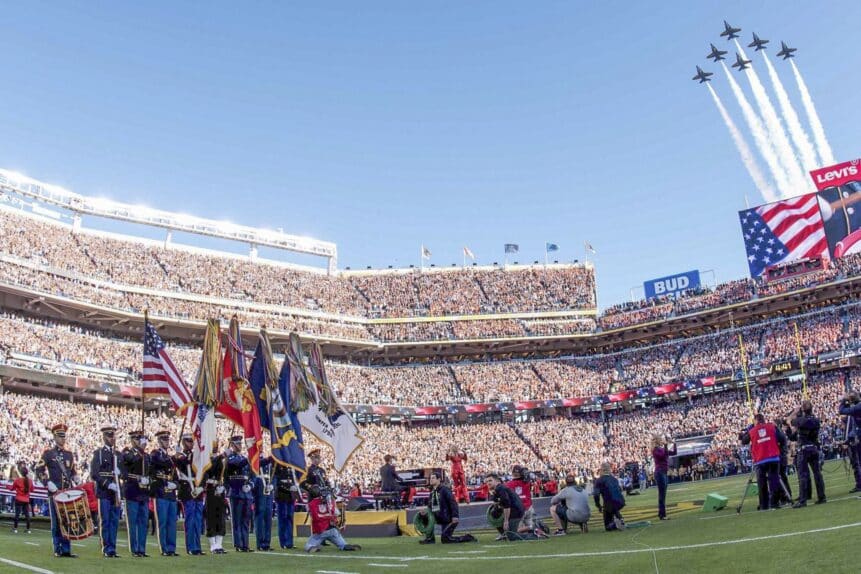
Large-scale events test the limits of public safety operations long before the first attendee arrives. From the Super Bowl to the Winter Olympics and the upcoming FIFA World Cup, these moments demand sustained vigilance across days or weeks. For fire, law enforcement, and emergency management leaders already operating under staffing shortages, the pressure compounds quickly.
The challenge is not simply crowd size or threat complexity. It is the cumulative impact of resource strain, coverage anxiety, and operational fatigue. When events stretch teams across extended operational periods, risk quietly accumulates. Still, leaders remain accountable, even as the margin for error narrows.
Extended Events Expose Hidden Staffing Vulnerabilities
Major events rarely replace routine responsibilities. Instead, they pull from the same limited pool of experienced personnel who already support daily operations. Coverage gaps emerge elsewhere in the jurisdiction as attention shifts to venues, fan zones, transportation corridors, and perimeter security.
This strain often concentrates on a small group of seasoned supervisors and operators. Over time, decision quality can erode, communications may slow or lose clarity, and response times often stretch. Operational fatigue becomes a silent force multiplier for risk.
Fatigue Can Undermine Judgment, Coordination, and Accountability
Fatigue-driven errors do not always announce themselves. They may surface as delayed decisions, missed handoffs, or conflicting instructions. In multi-agency environments, these breakdowns can cascade quickly with radio channels becoming more crowded, information fragmenting, and leaders losing confidence in the operational picture.
Accountability, however, never shifts. After-action reviews rarely focus on fatigue as a systemic issue. Instead, they scrutinize individual decisions. This dynamic reinforces coverage anxiety among leaders who know they are responsible regardless of staffing realities.
Why Leaders Must Address Resource Strain Proactively
Emergency managers and command staff cannot treat fatigue as an unavoidable byproduct of large events. It is a foreseeable operational hazard. Events that span multiple operational periods require deliberate strategies to protect both event safety and everyday community coverage.
Ignoring this reality increases risk not only at the event site but across the broader jurisdiction. Emergencies do not pause because a world-class event is underway. Let’s look at best practices for these types of scenarios.
Best Practices to Reduce Fatigue and Maintain Coverage
- Protect routine coverage with mutual aid and reserves – Assign dedicated event resources and use mutual aid or reserve units to backfill routine operations, preserving baseline service levels.
- Stand up unified command and interoperable communications – Activate ICS-based unified command with embedded cross-agency liaisons and shared communication channels to prevent fragmentation.
- Use predefined triggers for critical decisions – Establish thresholds that automatically initiate actions such as evacuation phases, staffing rotations, or public messaging, reducing hesitation when fatigue sets in.
- Assign tactical relief supervisors – Designate personnel focused solely on monitoring fatigue, enforcing rest cycles, and rotating crews independently from incident command.
- Deploy tools that centralize coordination – Reduce manual workload by using systems that integrate alerting, communication, and situational awareness, allowing smaller teams to manage complex operations more effectively.
How Genasys Helps Agencies Stay Coordinated Under Pressure
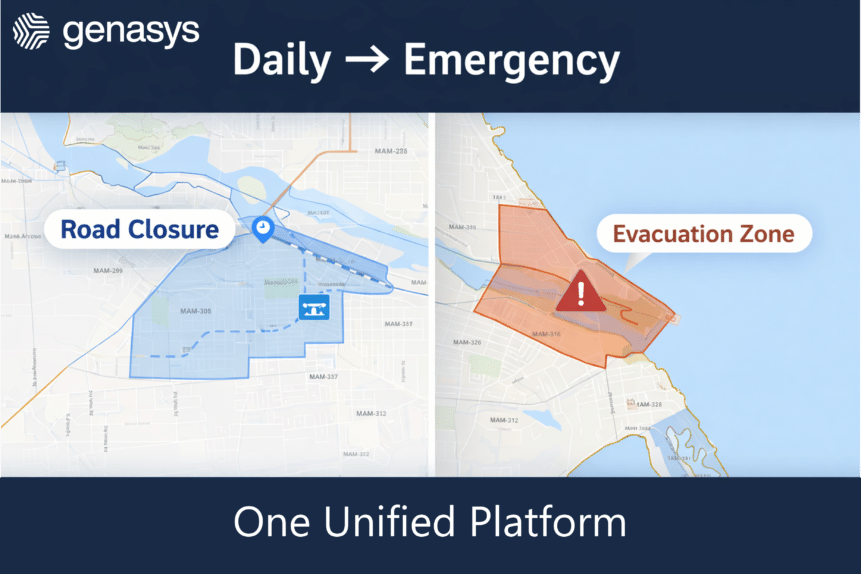
Genasys supports public safety agencies facing prolonged operational demands by simplifying coordination and decision-making during both large events and daily operations.
- Centralizes communications and situational awareness so fewer staff can manage more with less effort
- Enables fast, consistent messaging without rebuilding content repeatedly
- Maintains a shared operating picture as personnel rotate or reposition
- Creates compliant messaging across agencies
- Reduces reliance on congested radio-only coordination
- Quickly adds or reduces personnel or whole teams as situations change
- Preserves audit trails that support leadership decisions during after-action reviews
Closing Thoughts
Large-scale events will always test public safety organizations, but resource strain and operational fatigue do not have to become accepted risks. When staffing is stretched over extended periods, fatigue quietly undermines judgment, communication, and coordination, often in ways that are only visible after something goes wrong. Leaders remain accountable regardless, which makes proactive planning essential.
By safeguarding routine coverage, establishing unified command structures, using predefined decision triggers, and reducing manual coordination burdens, agencies can sustain performance even under prolonged pressure.
The goal is not simply to get through the event, but to emerge without degrading readiness elsewhere. As global events grow larger and more frequent, addressing resource strain head-on becomes a core leadership responsibility and a critical component of modern event safety planning.
Learn how Genasys helps agencies sustain coverage, reduce fatigue, and protect communities during high-demand events.