










At Genasys, we believe understanding these differences is crucial for any organization serious about modern safety and resilience, and this article covers the differences and similarities.
1. Mass Notification: The Foundation
Mass Notification refers to the capability to send one–way alerts and messages to a large group of people simultaneously. Its primary function is to disseminate information quickly during an emergency.
Key Characteristics:
- One–Way Communication: Primarily focused on broadcasting information out.
- Rapid Dissemination: Designed for speed in alerting a wide audience.
- Channel Diversity: Often utilizes SMS, email, voice calls, desktop alerts, and sometimes public address systems.
- Reactive: Typically triggered after an event has occurred or is imminent.
Mass notification is like a powerful megaphone: It gets your message out to everyone within earshot quickly.
Example Use Cases:
- An immediate alert about a severe weather warning.
- Notifying staff of a building closure due to a power outage.
- Issuing a university–wide lockdown message.
While essential, mass notification systems are often siloed and lack the robust planning, real–time intelligence, two–way communication, and coordinated response capabilities needed for complex critical events. They tell people what is happening, but not necessarily what to do, where to go, or how responders are coordinating.
2. Critical Event Management (CEM): The Strategic Framework
Critical Event Management (CEM) is a holistic, integrated framework and set of technologies designed to identify, assess, respond to, and recover from critical events that could disrupt operations, harm people, or damage assets. It moves beyond simple notification to encompass the entire lifecycle of a crisis.
Key Characteristics:
- End–to–End Lifecycle: Covers risk detection, assessment, planning, response, and post–event analysis.
- Integrated Intelligence: Collects and processes data from various sources (sensors, weather feeds, social media, threat intelligence) to provide a common operating picture.
- Situational Awareness: Provides real–time visibility into an event’s progression and its impact on people and assets.
- Two–Way Communication & Collaboration: Enables responders to communicate with each other, share updates, and receive feedback from those affected.
- Workflow Automation: Automates actions, such as triggering alerts based on specific criteria or initiating response protocols.
- Proactive & Reactive: Supports proactive planning and monitoring, as well as reactive response.
If mass notification is a megaphone, CEM is the entire emergency operations center, complete with intelligence feeds, strategic maps, and coordinated response teams.
Typical Use Cases:
- Managing a large–scale evacuation for a wildfire, dynamically updating routes based on fire spread.
- Coordinating security and medical response across multiple agencies during a major public event.
- Ensuring business continuity and supply chain resilience during a natural disaster impacting global operations.
Mass notification is a component within a comprehensive CEM strategy, serving as the crucial outbound communication tool.
3. Protective Communications: CEM Enhanced by Zone–Based Intelligence and Physical Amplification
Protective Communications isn’t just a CEM platform; it’s an advanced, integrated approach that combines software–driven Critical Event Management with the unparalleled reach of Zone–Based Communication and Genasys Acoustics hardware. It’s about ensuring every voice is heard and every instruction is clear, even in the most challenging, chaotic, or remote environments.
Key Characteristics Expand to Include:
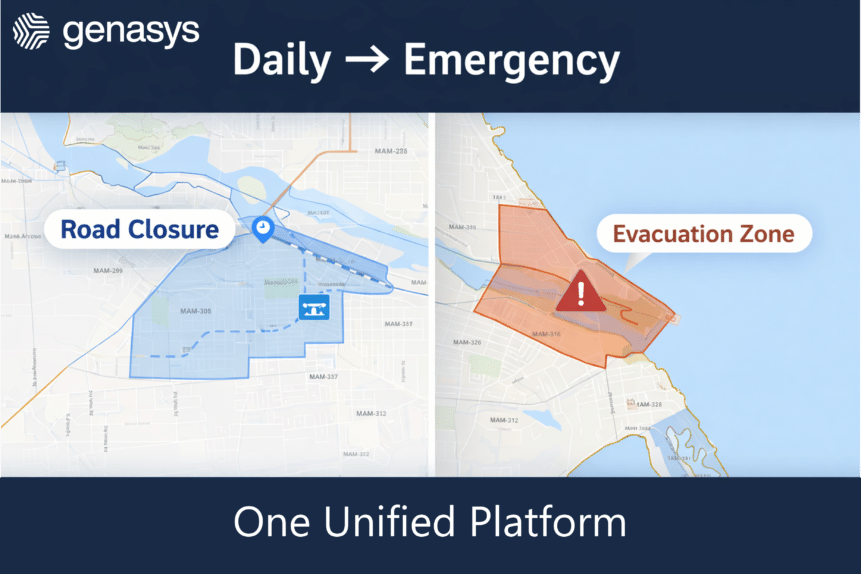
- Geospatial Zone–Based Logic: Unlike systems that rely on broad zip codes or unreliable “best–guess” polygons, Genasys uses pre–planned, standardized zones. This allows for hyper–local targeting, ensuring that a “Level 3 Evacuation” order only reaches the specific street blocks or topographical areas at risk, reducing “alert fatigue” and preventing unnecessary mass panic.
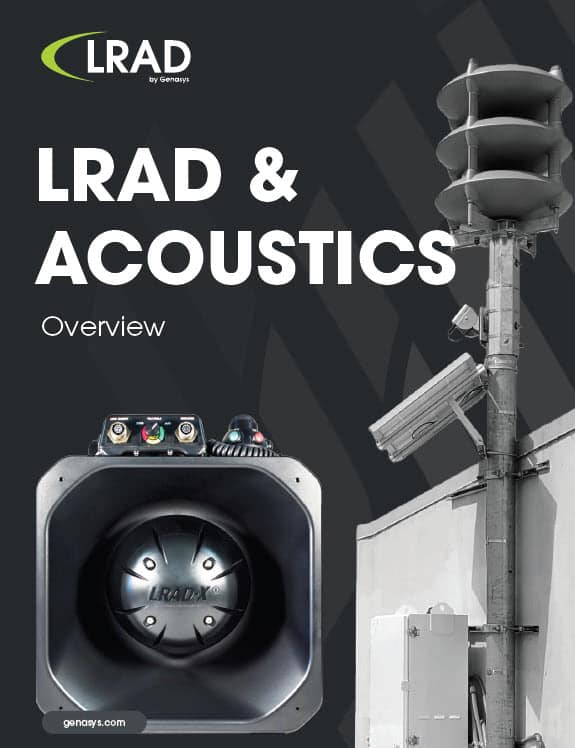
- Audible Reach & Clarity: Leverages Acoutics systems to deliver crystal–clear, intelligible voice messages over vast distances, through high background noise, and in environments where cell service or internet may be down.
- Physical Presence & Direction: Acoustics provides a physical, directional means of communication that can cut through chaos, guide crowds, and deliver instructions when digital channels fail or are unread.
- Integrated Software & Hardware: Seamlessly combines the advanced planning, intelligent automation, and multi–channel digital alerting of our CEM platform (Genasys Protect) with the physical presence of Acoustics.
- Full Spectrum Response: From risk detection and proactive zone planning to widespread digital and physical notification, collaboration, and post–event analysis.
When comparing CEM to the EOC, then Protective Communications is the EOC equipped with laser-like precision for targeting specific neighborhoods and a clear broadcasting voice that can be heard even when the power goes out.
Common Use Cases:
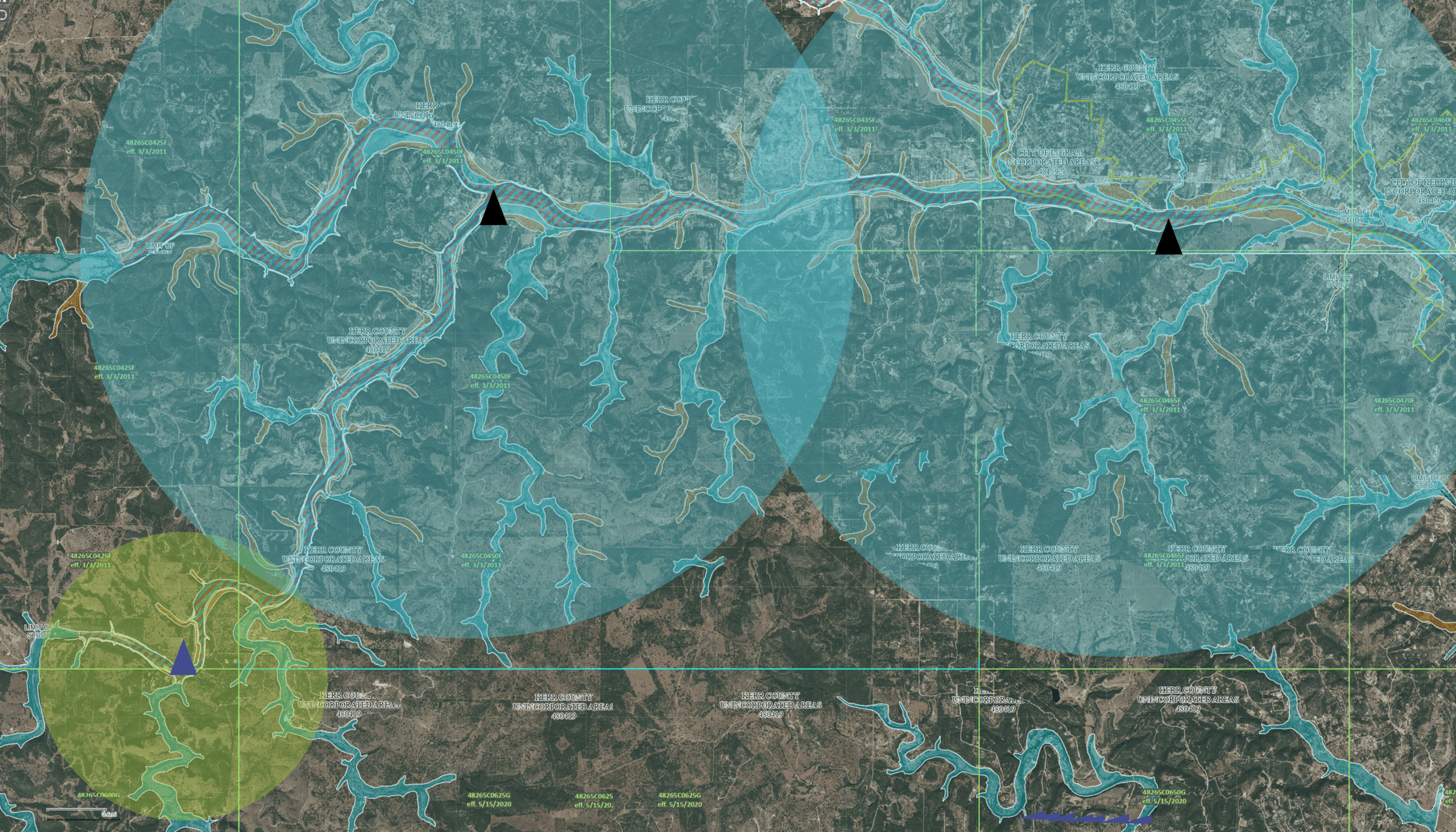
- Wildfires and Floods : Utilizing zone–based communication to evacuate “Zone A” while keeping “Zone B” on standby, all while using Genasys Acoustics to broadcast evacuation orders over fire lines to reach residents without mobile devices.
- Mass Gatherings: Directing crowd movement via specific seating zones and delivering critical safety messages at large sporting events or concerts, cutting through crowd noise where digital alerts might be missed.
- Active Shooter Situations: Providing immediate, clear instructions to individuals in a specific building zone, while simultaneously coordinating with first responders via secure digital channels.
Protective Communications fills a critical gap left by purely digital CEM solutions. It recognizes that in real–world emergencies, technology can fail, and human factors like panic and confusion need both precise spatial targeting and a strong, undeniable physical presence to guide them to safety.
The Evolution of Safety
| Feature | Mass Notification | Critical Event Management (CEM) | Protective Communications (Genasys) |
| Primary Goal | Rapid Information Dissemination | End–to–End Crisis Management | Comprehensive Safety with Physical Voice Authority |
| Targeting Method | Broad Lists / Zip Codes | Geo–fencing / Broad Polygons | Pre–Planned, Intelligent Zones |
| Communication Flow | One–Way Broadcast | Two–Way & Collaborative | Include Voice-Speaker Broadcast |
| Intelligence | Limited | Holistic Data Integration | Holistic Data Integration |
| Planning | Basic Alert Triggers | Proactive Scenario Modeling | Proactive Scenario Modeling |
| Response | Alerting Only | Coordinated Action & Tracking | Coordinated Action, Tracking & Physical Guidance |
| Channels | Digital (SMS, Email, App) | Digital (SMS, Email, App, Internal Platforms) | Digital + LRAD (Physical Hardware) |
| Reach | Digital Subscribers | Digital Subscribers & Responders | All Affected People (Digital & Audible) |
Conclusion
While Mass Notification remains a vital tool, and Critical Event Management offers a robust strategic framework, Protective Communications elevates safety to an unprecedented level. By integrating the and reach of advanced CEM software with the intelligence of hyper-targeted messaging zones and the undeniable power of Genasys Acoustics technology, we ensure that during a crisis, your message isn’t just sent – it’s heard, understood, and acted upon. You can read more on our page covering CEM and Mass Notification.
When lives and livelihoods are on the line, choosing the right communication strategy isn’t just about efficiency; it’s about ultimate effectiveness. Choose Protective Communications for complete safety and resilience.