











By Liz Simpson, Regional Sales Manager, Northeast U.S.
Key Takeaways:
- Winter storms strain staffing, power, and communications over extended periods, forcing public safety leaders to sustain response with limited resources and incomplete information.
- Fatigue and fragmented coordination increase risk during prolonged events, making it harder to maintain situational awareness, consistent messaging, and confident decision-making.
- Centralized systems help agencies do more with less, enabling smaller teams and multiple agencies/jurisdictions to stay coordinated, reduce manual work, and maintain continuity throughout long-duration winter response.
Prolonged winter storms place extraordinary strain on public safety agencies. Power outages, impassable roads, staffing shortages, and constant public demand turn these events into multi-day operational marathons. Emergency managers, fire, and law enforcement leaders are often forced to make high-impact decisions with limited staff, incomplete information, and infrastructure failures largely outside their control.
These challenges reflect the reality of operating under sustained pressure, where coordination becomes harder as conditions degrade and fatigue accumulates.
This article looks at the challenges winter storms create for public safety agencies and shares practical ways to reduce friction, maintain situational awareness, and keep the public informed when resources are stretched thin.
Winter Storms are an Endurance Test
Unlike many other disasters, winter storms don’t arrive, peak, and pass. They linger, forcing agencies to sustain operations while impacts compound. Power outages lead to heating emergencies. Road closures isolate communities. Communication is impeded by infrastructure disruptions. Mutual aid helps, but it also adds coordination overhead.
There are only so many people available to staff EOCs, manage field operations, issue public updates, and coordinate partners. Winter storms push those limits quickly, even for well-prepared agencies. One of the greatest challenges is sustaining an effective response over time.
Staffing, Fatigue, and the Weight of Decision-Making
The DHS’ pause on planned FEMA disaster cuts demonstrates the expected severity of Winter Storm Fern. Extended winter response places a heavy cognitive and operational burden on leadership. Long operational periods disrupt normal rotations and force difficult staffing trade-offs. Fatigue can degrade judgment, slow response, and increase the risk of missed or inconsistent information.
Yet decisions don’t pause. Leaders must continue prioritizing resources, coordinating across agencies, and communicating clearly with the public while conditions evolve and information remains incomplete.
Accountability remains constant throughout. Decisions made under extreme conditions will still be reviewed after the storm passes. The complexity of the event does not reduce the expectations placed on leadership; it only raises the stakes.
Complexity Is the Real Enemy During Winter Response
Winter storms rarely stay within a single jurisdiction or discipline. They require coordination across fire, law enforcement, EMS, public works, utilities, transportation agencies, and neighboring jurisdictions. Each brings its own systems, data, and priorities.
When information is fragmented across emails, radios, spreadsheets, dashboards, and phone calls, complexity compounds. Teams duplicate work. Updates fall out of sync. Leaders lose confidence in what information is current.
Radio remains essential, but during major winter events it becomes congested. Critical details are missed, documentation suffers, and maintaining a shared understanding of what is happening (and what has already been communicated) becomes increasingly difficult.
What Helps Agencies Operate Under Constraint
During prolonged winter events, effectiveness isn’t about doing more. It’s about reducing friction so limited staff can focus on decisions that matter. Agencies benefit from systems that:
- Centralize information to lower cognitive load
- Allow smaller teams to manage larger, more complex incidents
- Preserve continuity as staff rotate in and out
- Reduce time spent recreating messages or tracking decisions manually
- Maintain a common operating picture across agencies and jurisdictions
These capabilities help agencies sustain operations without overloading already stretched personnel.
How Genasys Supports Overextended Teams During Winter Events
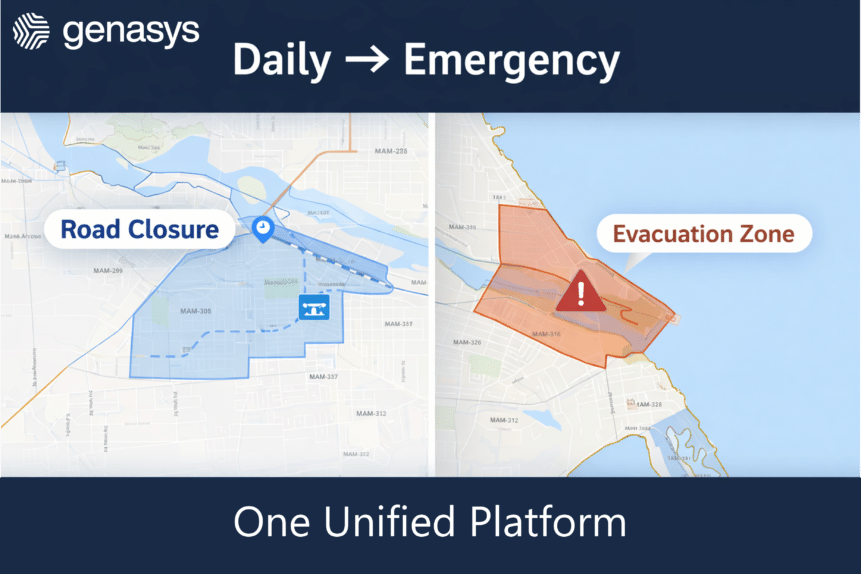
Genasys Protect centralizes alerting, communications, and situational awareness in a single platform. By bringing operational context and public messaging together, agencies can manage complex winter events with fewer people and greater consistency.
Protect enables faster, repeatable messaging without rebuilding alerts every operational period and maintains a common operating picture among multiple teams, agencies, and jurisdictions. This continuity supports both large metropolitan agencies and smaller jurisdictions with limited staff.
Genasys Evertel reduces reliance on radio-only coordination, which often becomes congested during major events. It supports more efficient information sharing while preserving audit trails that document decisions and actions. These records are critical for accountability and after-action reviews once the event concludes.
Together, these systems are designed to reduce friction and support better decision-making under sustained pressure.
Supporting Professionals Doing Difficult Work
No system can eliminate every challenge posed by severe winter storms. Infrastructure will fail and conditions will remain unpredictable. But agencies can take steps to make response more sustainable, coordination clearer, and communication more consistent.
Winter preparedness requires supporting the professionals responsible for protecting communities when conditions are at their worst and giving them tools that respect the realities they face.
Learn how Genasys supports public safety agencies before, during, and after prolonged winter events.