











By Chris Higgs, Account Executive at Genasys Inc.
Key Takeaways:
- Daily communications strengthen emergency preparedness by building staff familiarity with workflows and tools.
- Routine operational use delivers immediate value for incidents such as traffic disruptions, hazards, and planned events.
- Consistent public messaging builds long term trust and improves community response during major emergencies.
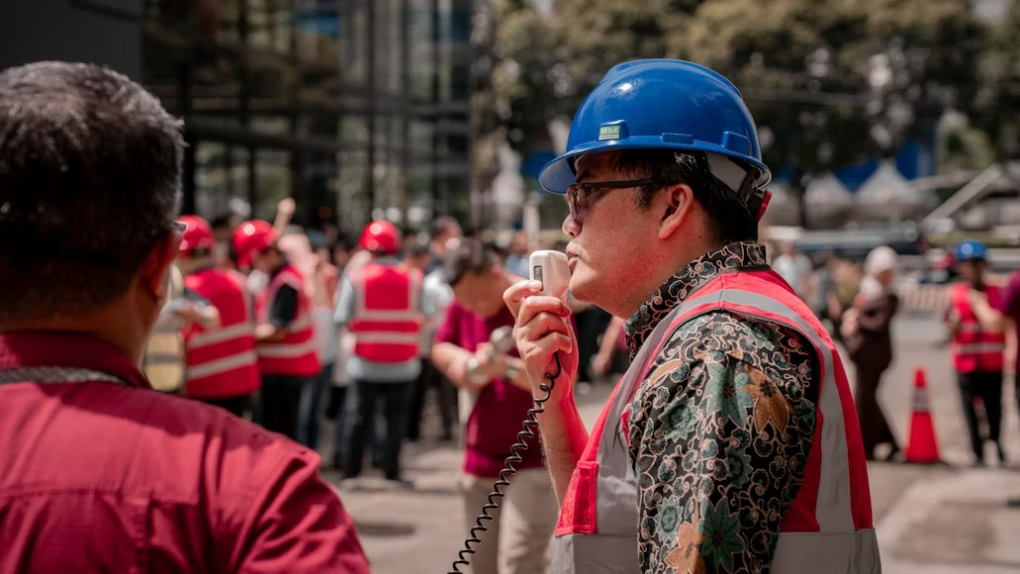
Many emergency communications systems are designed exclusively for rare, high impact events such as major storms, wildfires, or large scale evacuations. Many of these systems can only be used during these high-stakes incidents, which means they sit idle most of the time and fail to provide consistent value. While this may appear to be specialization, their lack of flexibility often makes them less effective when emergencies actually occur.
At the same time, public safety agencies are expected to improve emergency preparedness, strengthen coordination, and increase operational efficiency, despite already operating at or near team capacity.
This blog explores how that is possible, the value of daily communications, why many emergency communications systems underperform, and how agencies can overcome these challenges.
Daily Operational Communications Deliver Immediate Value
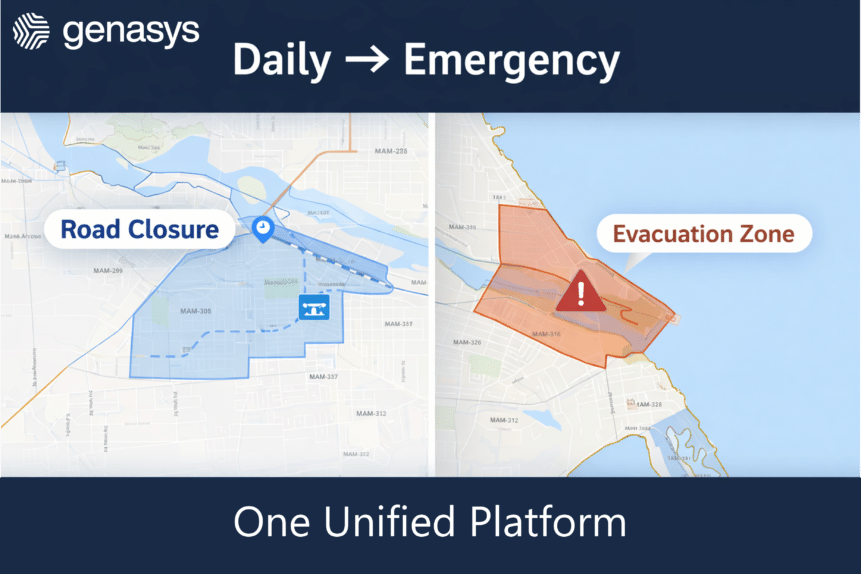
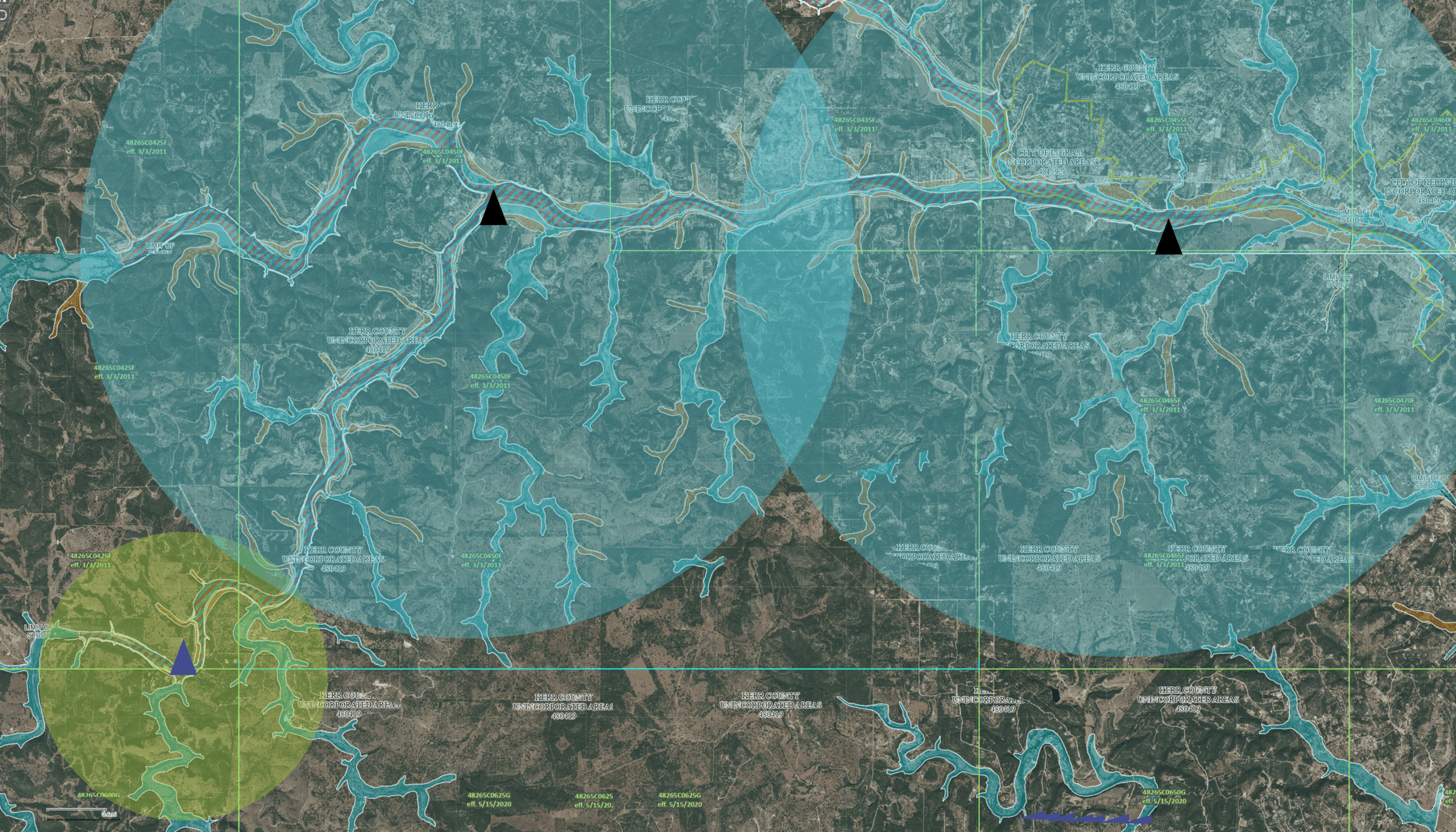
Emergency communications systems with precise communication zones, a common operating picture, and intelligent mapping that can be shared publicly can go beyond emergencies and also provide significant value during routine operations.
Examples include:
- Traffic accidents that disrupt transportation corridors
- Utility shutdowns or maintenance affecting specific neighborhoods
- Planned events that require crowd coordination, e.g., large festivals, marketplaces
- Localized hazards such as road closures or weather impacts
- Public health and weather updates
Using communications platforms for these everyday situations allows agencies to share timely information while maintaining situational awareness across teams. Beyond its immediate value, daily operations also help overcome issues posed by emergency-only communications systems and strengthen emergency preparedness.
Why Emergency Communications Systems Often Underperform
Many public safety agencies invest in communications systems designed exclusively for large scale emergencies. These tools are critical during high impact events, but when used only during rare incidents they fail to deliver consistent operational value.
Several challenges emerge when systems are used infrequently:
- Staff are less familiar with workflows and approval processes making them less confident and more prone to committing errors
- Message templates and zone structures are not well-established or routinely practiced, causing confusion and delays for public alerting
- Coordination across departments or agencies becomes slower during incidents due to lack of familiarity with workflows and the systems themselves
Over time, limited system use reduces confidence and efficiency when agencies need the platform most. Emergency communications systems that are capable of daily operational use help address this gap.
Daily Use Strengthens Emergency Preparedness
One of the most important benefits of daily communications is improved readiness during real emergencies. When emergency communications platforms are integrated into daily workflows, staff develop familiarity and confidence with the tools they rely on during major incidents.
Regular system use allows teams to:
- Practice zone creation and management
- Follow and practice established message approval workflows
- Maintain incident mapping and situational awareness
- Coordinate across departments using consistent communication channels
Over time, these activities build operational muscle memory. During high impact events, teams can act quickly because the processes already feel routine. Preparedness becomes the result of consistent practice rather than sporadic training.
Consistent Communications Build Public Trust
Consistent messaging can either build trust with communities or alert fatigue. Daily communications support this relationship in several ways.
Residents are more likely to subscribe to alerts when the information they receive is useful and relevant to their daily lives. But how do you prevent alert fatigue build up? Precise communication zones make this possible by eliminating irrelevant alerts that create alert fatigue, which can cause communities to tune out warnings when they learn many alerts do not apply to them.
Public maps and apps are an intuitive source of updates with context that helps residents understand what is happening in their community.
Over time, consistent communications create transparency and credibility. When a major incident occurs, the public already understands where to find reliable information and how to respond.
Simplifying Work by Reducing Technology Sprawl
Many public safety teams suffer from having too many different systems to handle diverse use cases. Each of these systems requires personnel to train and practice using them, new sets of logins and passwords, and of course investment.
Handling so many different systems is not feasible. In reality, this means a lot of these systems end up not getting used as teams are not large enough and do not have the time to put them to good use. This is a direct consequence of systems being incapable of handling diverse use cases.
By consolidating daily operational use with critical emergency communications systems public safety officials are able to take full advantage of both and get a lot more done without adding complexity.
Turning Daily Communications into a Strategic Capability
Modern communications platforms can support both routine operations and emergency response through integrated alerting, mapping, and coordination tools.
Solutions such as Genasys Protect enable agencies to:
- Deliver targeted alerts and routine notifications across multiple channels
- Manage zone based messaging and incident mapping
- Coordinate internal team communications during daily workflows
- Scale seamlessly from routine updates to major incident response
By supporting both day-to-day operations and emergency preparedness, these platforms help agencies maximize the value of their communications infrastructure. Daily communications transform emergency technology into a continuously used operational capability rather than a system reserved only for major incidents.
Conclusion
Emergency communications systems are most effective when they are used consistently. Agencies that integrate communications technology into daily workflows improve preparedness, strengthen operational efficiency, and build lasting public trust.
By supporting routine communications, localized incidents, and major emergencies through a single coordinated platform, agencies can ensure their teams are always ready to respond when it matters most.
Contact Genasys to learn how daily communications can strengthen your operational readiness and improve community engagement.
FAQs
What are daily communications in emergency management?
Daily communications refer to the use of emergency communications systems for routine updates, operational coordination, and localized incidents rather than only during major emergencies.
These communications may include:
- Traffic and road closure updates
- Utility disruptions
- Planned event notifications
- Local safety advisories
Regular use helps improve preparedness and workflow familiarity.
Why should emergency communications systems be used daily?
Daily use improves both preparedness and operational efficiency.
Key benefits include:
- Increased staff familiarity with workflows
- Faster message approvals during emergencies
- Improved situational awareness through regular mapping
- Better coordination between departments
Consistent use ensures systems perform effectively during high impact events.
How do daily communications improve public trust?
Daily communications strengthen trust by providing reliable, relevant information to residents.
Benefits include:
- Reduced alert fatigue through zone based messaging
- Increased subscription rates for public alerts
- Greater transparency through incident maps and updates
- Familiarity with official communication channels
Communities respond more quickly to trusted information sources during emergencies.
What types of incidents benefit from daily communications?
Many routine situations benefit from emergency communications platforms, including:
- Traffic accidents and road closures
- Localized weather hazards
- Utility outages or maintenance events
- Community events requiring coordination
Using the system regularly helps agencies refine workflows and maintain readiness for major incidents.