












By Adam Stewart, Product Marketing at Genasys
Key Takeaways:
- Cold weather readiness challenges decision makers to act early with incomplete forecasts.
- Effective emergency communications and redundancy are essential during winter storms and grid failures.
- Leaders must prioritize situational awareness, warnings, closures, and cohesive action under pressure.
Severe winter storms are among the most complex natural hazards emergency managers confront. Forecasts for Winter Storm Fern, projected to impact millions from January 23 to 25, 2026, indicate a massive system of snow, ice, and dangerously low temperatures extending from Texas through the Midwest and Northeast. Millions are under winter storm watches and warnings, and states are declaring emergencies to mobilize resources ahead of heavy precipitation, ice accumulation, and freezing conditions.
In these conditions, cold weather readiness becomes a leadership test that forces early decisions on warnings, coordinated closures, and protective actions even when information is incomplete. This dynamic underscores the crucial interplay between preparedness, situational awareness, and rapid, accurate communication.
PROJECTED STORM – January 23, 2026
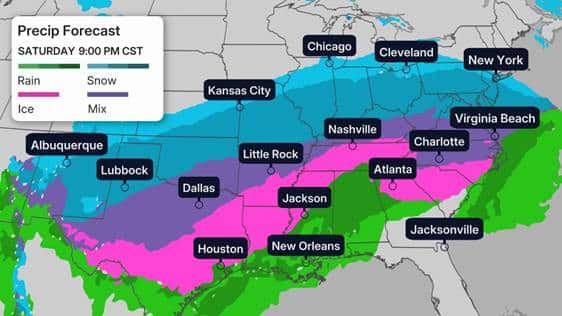
Source: The Weather Channel
The Decision Pressure of Early Warnings
Forecasting winter snowstorms, ice storms, and deep freeze conditions has inherent uncertainty. Models evolve rapidly, and the track or intensity of a storm may shift, requiring leaders to transition from watches to warnings quickly.
Emergency managers and first responders must decide:
- When to issue public warnings to encourage preparation.
- When to recommend or enforce traffic closures to protect lives and ensure road crews can operate safely.
- When to activate shelters and warming centers before extreme cold sets in.
These decisions carry significant consequences. Issuing alerts too late can endanger residents, while premature action can strain community resources and erode public confidence. Leaders must constantly weigh evolving data and communicate the rationale for their choices clearly.
Maintaining Situational Awareness During Winter Storms
Situational awareness is the backbone of any coordinated response. In winter conditions, maintaining real-time understanding of ground conditions, utility status, and infrastructure impacts is essential.
Key practices include:
- Multi-Source Weather Monitoring – Track forecasts from reliable meteorological sources and interpret local conditions in real time.
- Infrastructure Status Updates – Coordinate with utility providers and transportation agencies to monitor grid stability and road conditions.
- Redundant Communication Channels – Use multiple, resilient methods to share critical information with field teams and the public. Redundant communication systems mitigate the risk of outages disrupting messaging.
When heavy snow or freezing rain affects the grid, communications networks can fail. Redundant systems ensure leaders and first responders stay connected, even during cascading infrastructure failures.
Emergency Communications and Redundancy
Effective emergency communications are more than a technical function. It is a strategic necessity for survival when ice storms, grid failures, or cascading outages occur.
Communication redundancy includes:
- Back-Up Power Systems – Ensures connectivity during outages and keeps emergency alerts flowing.
- Multiple Broadcast Channels – From traditional media to mobile alert platforms, redundancy spreads critical information.
- Field Communication Tools – Equipping first responders and emergency personnel with resilient devices supports coordination when primary networks fail.
Rapid dissemination of warnings, closures, and guidance through multiple channels strengthens public trust and compliance during crises.
Coordinated Response for First Responders and Emergency Managers
Winter storms stress all facets of public safety systems. A coordinated response requires unified command structures, interagency collaboration, and clear communication protocols. Shared situational awareness among first responders and emergency managers accelerates response time and reduces risk.
Leaders must prioritize:
- Ongoing updates between agencies
- Clear public advisories with actionable guidance
- Communication plans that anticipate outages and network disruptions
This coordination enhances safety and builds resilience in communities.
Using Genasys Protect to Strengthen Your Team’s Response
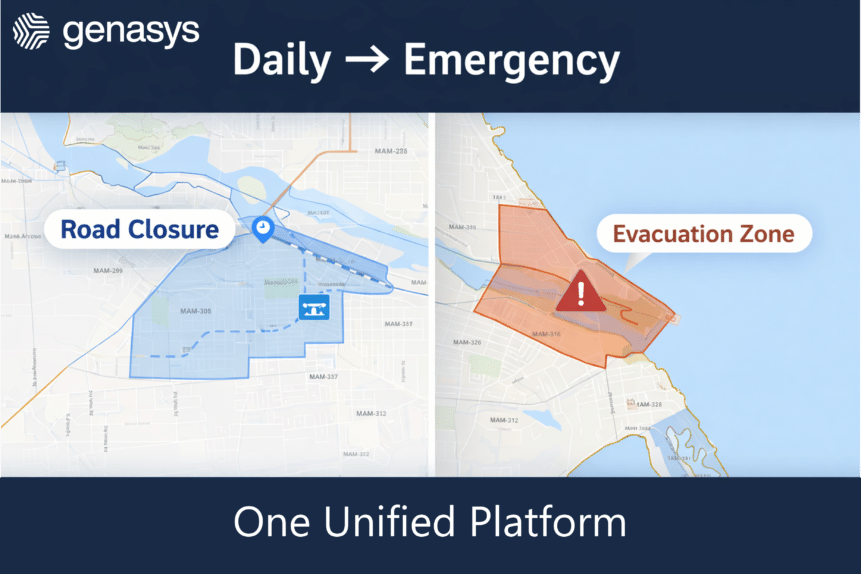
Genasys Protect strengthens cold weather readiness by enabling emergency managers and first responders to rapidly issue targeted, location-aware alerts across multiple channels from a single, authoritative platform.
During winter storms, grid failures, and cascading infrastructure outages, Genasys Protect supports fast decision making, communications redundancy, and consistent public messaging. Its ability to integrate situational inputs, manage alert workflows, and maintain operational continuity helps leaders act early with confidence, coordinate closures and protective actions, and keep communities informed even when conditions and forecasts are changing quickly.
Conclusion
Cold weather readiness is more than strategy. It is a litmus test for leadership in emergency communications and response. The pressure to make timely decisions during winter snowstorms and ice storms, often with incomplete information, highlights the need for strong situational awareness, communication redundancy, and coordinated action.
Emergency leaders who invest in resilient communication systems and comprehensive readiness plans enable their communities to face winter storms with confidence and clarity.
Ensure your emergency communication systems are resilient before the next storm hits. Connect with our communications experts to strengthen redundancy and enhance situational awareness across your operations.
Contact Genasys to learn more about Genasys Protect’s emergency options when facing unprecedented storms and other extreme weather events.